

The Difference Between a Lodge That Accepts Children and One Designed for Families
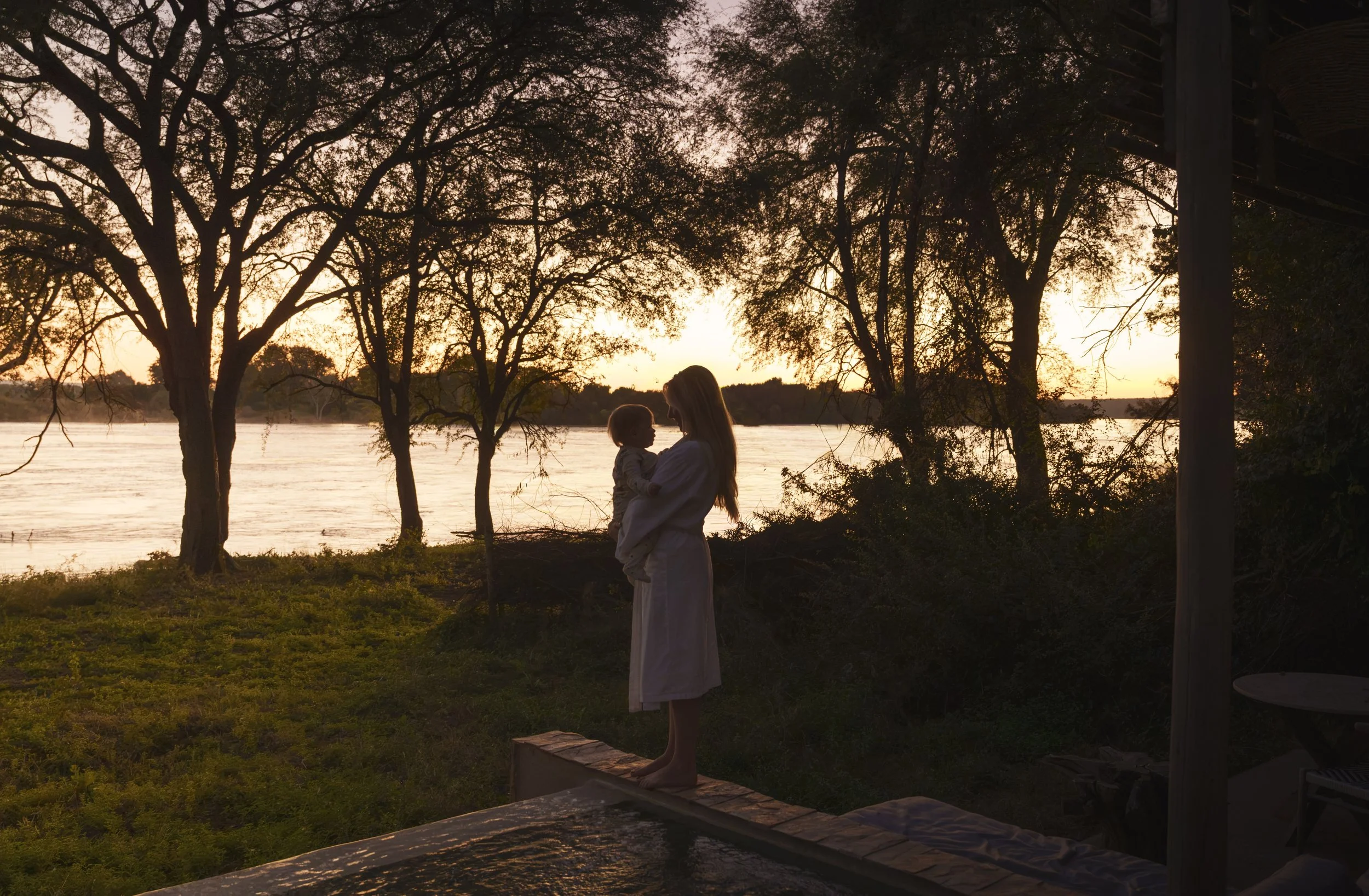
We are off the plane and straight into the bush, bumping along towards our first safari lodge with Bradley beside us. We have been building up to this trip for months. Our first safari lodge as a family. After years of photographing Africa, I was finally going to see it through my daughter's eyes. All the excitement, and all the quiet nerves that come with taking a small child somewhere built around wild animals, long drives and adult schedules.
When we arrive, the lodge staff are singing and dancing. Bradley is pointing, clapping, completely delighted, and I am beaming beside her watching it land in her little mind. For a moment I feel the tension leave my body. We are here. She is happy. Perhaps I had worried for nothing.
Then, through the smiles, I see them.
Only two welcome drinks are coming towards us. One for me, one for my husband.
Nothing for the little girl holding my hand.
Nobody has done anything wrong. The manager is warm. The towels are cool and scented. We are greeted properly, by name. It is polished and generous and exactly what a luxury safari welcome is supposed to be. Except that the welcome passes straight over Bradley and lands on the adults, and she stands beside us while the arrival happens around her, like a bag someone will deal with once the important part is finished.
So I step forward and make the introductions. I say her name. I explain her age. I mention that she has missed a nap, and I watch the team absorb this and quietly work out what to do with it, while I am still standing in reception with a nappy bag on my shoulder. So much for the nerves disappearing.
Ninety seconds in, and I already know what the next four days are going to ask of me.
Over the years I have realised that child friendly is not a standard. It is a mood, and it shifts with who happens to be on shift and how naturally they understand children. Some lodges have redesigned the entire experience around families. Others have simply decided they do not object to them. Both use the same two words on their websites.
What you are looking for is a lodge where your child is met rather than managed. Where nobody is waiting for you to apologise for her presence. Where the welcome has been planned for every person arriving, because somebody thought about your family long before you stepped out of the vehicle.
Do You Need a Private Vehicle on Safari With Children?
The one thing I would never book a family safari without.
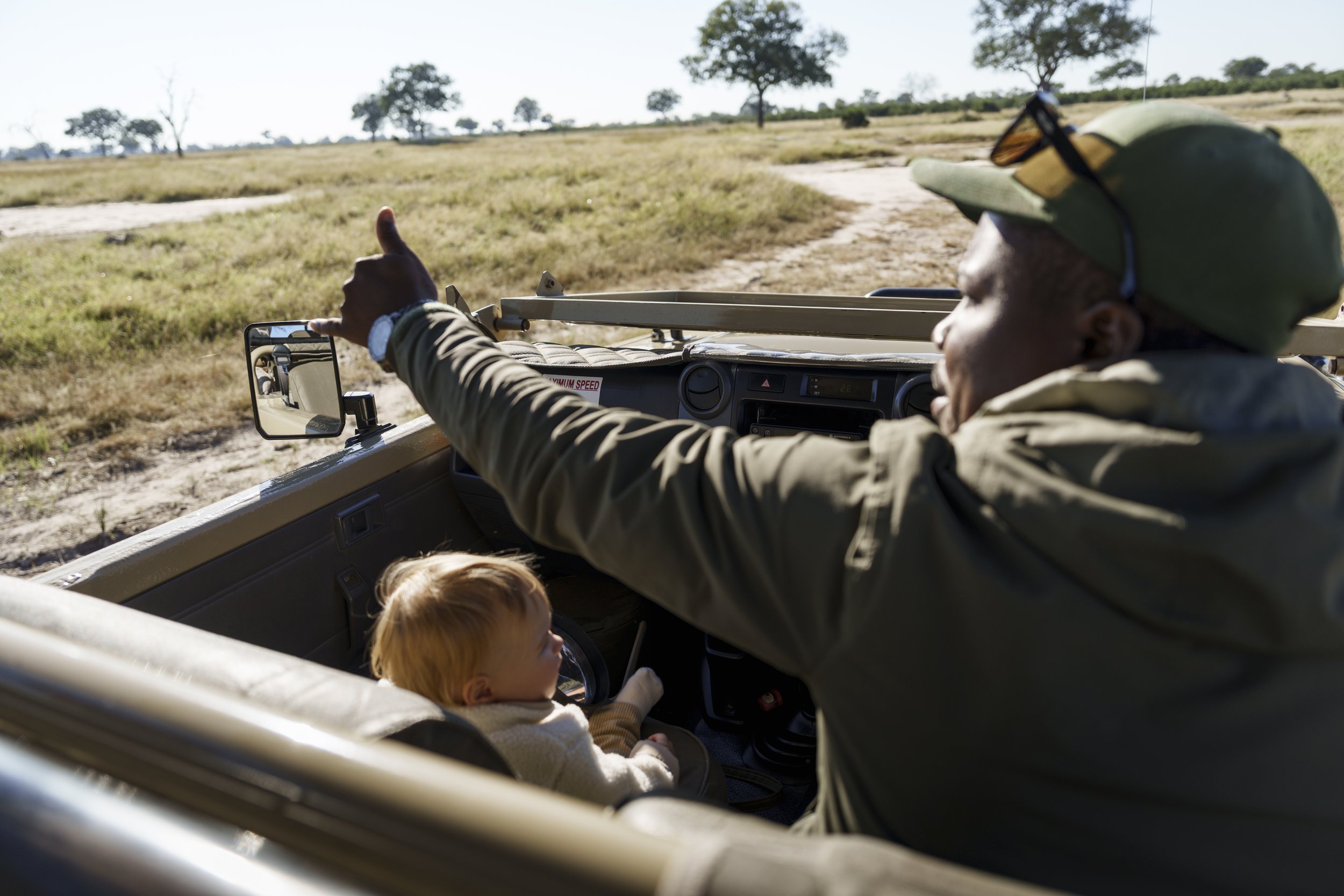
The vehicle leaves when she's ready, not before.
Most lodges, luxury or not, won't take a child under six on a game drive. This is something we have learned that nobody tells you until you're deep into planning. Not a difficult child, not a loud one. Even a child well versed in Africa like ours. Any child. The vehicle leaves on a game drive and your daughter isn't on it. We've assumed this before, that surely because she's under the age limit to have a shared vehicle, they'll just allocate one for us. Not always. And having to feel that lump in my throat that I have to leave her behind because there aren't enough vehicles to accommodate us, is a lot. I've been there.
This means that the private vehicle isn't an upgrade. It's the whole point of us being on safari with her. It's the difference between having our child see an elephant for the first time with us and our child hearing about one at breakfast. As a mom, not having time to figure out who will be looking after her, what their routine looks like versus hers, will she eat enough, will she go down easily. The constant worry of my child back at camp is not one I want to play with. The objective of us being here is to have full control over her experience with us. And that's what a family safari needs to promise.
We understand that the rule exists for a reason. Three other guests, three to four hours, and a little person who, ninety minutes in, has decided she's finished. Shared vehicles run on everybody wanting roughly the same thing, big five sightings, a guide's attention, coffee and sundowner stops when we're all done and going with the flow of Africa time. Not our child's time. We paid to be here on her schedule. They did not.
This is why House of Wild only books private vehicles as standard. Not because it's more comfortable, though it is. But because we are not sending you to Africa with your child for you to end up leaving her behind at camp with a babysitter.
Two drives a day, six hours or more in that vehicle. It is the safari. That time needs to be spent on your child's schedule, just like it would be back at the lodge. If your mornings are slower, your guide waits. If you only want a short drive and a longer coffee stop to stretch little people's legs, then that's what you do. In our opinion, this is always the case, shorter drives, long stops, more exploring, more guide-tracker-child interaction. And sightings become a matter of judgement rather than obligation. The lions are too close, he gets to move on. Elephants in the distance, maybe a quick look because your child is relaxed, that's ok. Flexibility where it actually counts, on the part of the day your child will remember. This is the part we won't negotiate on.
Are Safari Guides Trained to Work With Children?
Nobody trains a guide to talk to a four year old.
The truth is this: almost no guide is specifically trained to guide children. I know this because I am a qualified guide on paper. When a guide starts their career, it's a textbook, and I never really needed that qualification in practice. I wanted knowledge, not performance. Performance in a guiding exam is based on adults in the vehicle, because the adult safari market is the safari market. Guiding children isn't taught, it's learnt. It's hours spent with small people in the back of the vehicle that gives a great guide the nuances to take a small human into the wild and awe them.
Adult guiding rewards knowledge, patience with silence, and reading a sighting. The textbook hours that can be taught. Child guiding rewards none of that. It's pacing, physical involvement, knowing when to stop talking. A brilliant adult guide can be genuinely poor with a four year old and nobody, including him, thinks anything has gone wrong.
Almost no lodge selects their guides based on "great guide with kids". Lodges hire on qualification and sighting experience. There's no line on the assessment for whether someone enjoys children. When we get a guide who's great with Bradley, it's luck, unless the lodge sees a special trait and builds a guiding team around how kids behave. Or should we say, knows how to interpret a parent's needs when even they don't know how. That's a lodge that is built for families.
What Makes a Good Safari Guide for Families?
What I look for, and what I have learned to walk away from.
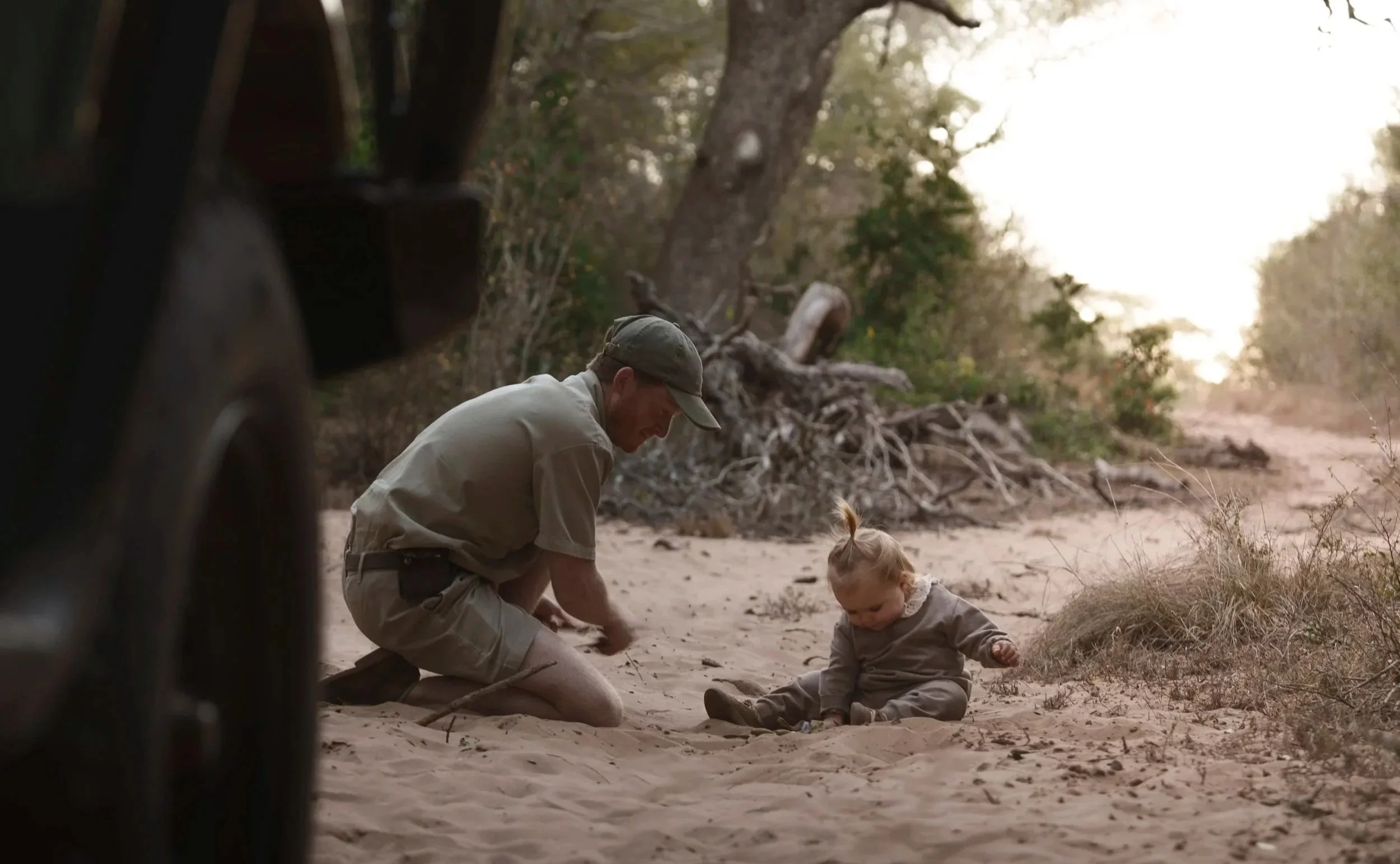
This is the part no guiding exam can teach.
I got asked this question by a guide at our last lodge. A good guide is inclusive, they're here for your whole experience, not just game drive time. They will sit down with you before you have even begun your game drive and introduce themselves. They will ask questions about your child, and genuinely absorb it. They'll want to know what she eats, in our case always to have back up bananas. And they'll ask what your schedule typically looks like, while sharing theirs. During game drives there will always be a sense of involvement, stopping to pick up feathers, look at tracks or smell interesting plants. If a guide hands your child something before it's offered to you, you know they have her best interest in mind. During coffee and sundowner stops there will be exploring, little chats that can explain the same thing four times to help her absorb it. A good guide will make you feel like this is your child's safari and you're along for the ride. Backup bodyguards to the celebrity on the vehicle.
It's worth explaining what bad guiding with kids looks like, though as a parent you'll know, and we honestly hope you won't have to. Guides who don't meet our requirements just somehow make the experience feel strained. The mom guilt finds a way to rub off on your child, and getting an unsettled threenager to listen while the guide talks through the chaos and ignores the issue is not great guiding. We've found most guides who don't get kids will ignore a child completely, making it your problem to solve alone. Or they take it to the other extreme and avoid any situation or sighting with a child on board, rather than guide their way through it.
A lot of guides are trained with a formula in mind. Take off, tick off sightings, stretch leg stop, head back to camp. Sightings are the standard currency and it's a hard habit to kick. We once had a guide who was brilliant, so good with Bradley, and on our last evening drive the formula kicked in. He was so focused on getting us a sighting that he missed the moment to stop for a sundowner, and by the time we got his attention it was too dark and our child had absolutely lost it. He was a great guide. But the formula is stronger than the man, and under pressure it wins.
Then there's the tracker, or what Bradley calls her bestie. I still haven't worked out why trackers connect with kids the way they do, but they do, and the relationship between the two is something quite special. Not all lodges and countries run a tracker and guide duo as standard, but the ones that do make the whole guiding team experience with children that much sweeter. Even in moments when your guide is in his own mode, the tracker fills the gap as the bush buddy.
We vet guides before suites. That's part of our lodge listing process at House of Wild, because you can't know any of this from a website, which is exactly why we make it our mission to know the teams on the ground. If we've met them personally, we can be confident about the care you're getting. We'll often request guides by name once we know your family's interests and your children's ages. It isn't always possible and plenty of lodges resist it, but we've made it part of how we book. Not every guide suits every family, and working out the fit shouldn't be something you discover on day two of your holiday. That's our job, and we do it before you ever get on a plane.
What a Family Safari Lodge Day Actually Looks Like
Wake up calls in the dark, dinner at eight, and a toddler who agrees to neither.
The tell isn't whether a lodge will accommodate you. Almost all of them will, once. The tell is whether flexibility requires a conversation every single time, or is simply how the place runs once you've set the tone.
The standard safari schedule looks roughly like this: a wake up call in the dark, drive, brunch at eleven, afternoon nap, high tea, evening drive, dinner at eight. Built around game drives, adults and light, and it works beautifully if you're two people. It's also what makes people come back time after time, because the familiarity is the appeal, and knowing what you're getting is why it works so well. Wildlife has its prime time, and sightings are the reason you go. The rest is built around it. Unless you're a family, and then your orbit is less about the lion and more about your own two-legged cub.
As a family, that schedule just doesn't fit. Dinner at eight is an hour after bedtime. Brunch at eleven is two hours after she needed food. The afternoon downtime lands exactly when she's finally awake and wanting to run.
The good news is that you've booked a private vehicle. You'll still see the lion. It may not be in that photographic golden hour, but it will be on the schedule you paid for, and not at the cost of the rest of your day. A lodge that already has your child's dinner prepared for six, versus a lodge that waits for you to arrive before starting to cook for a tired, hungry child. One of those is designed. The other is a favour, and you'll feel the weight of asking by day three.
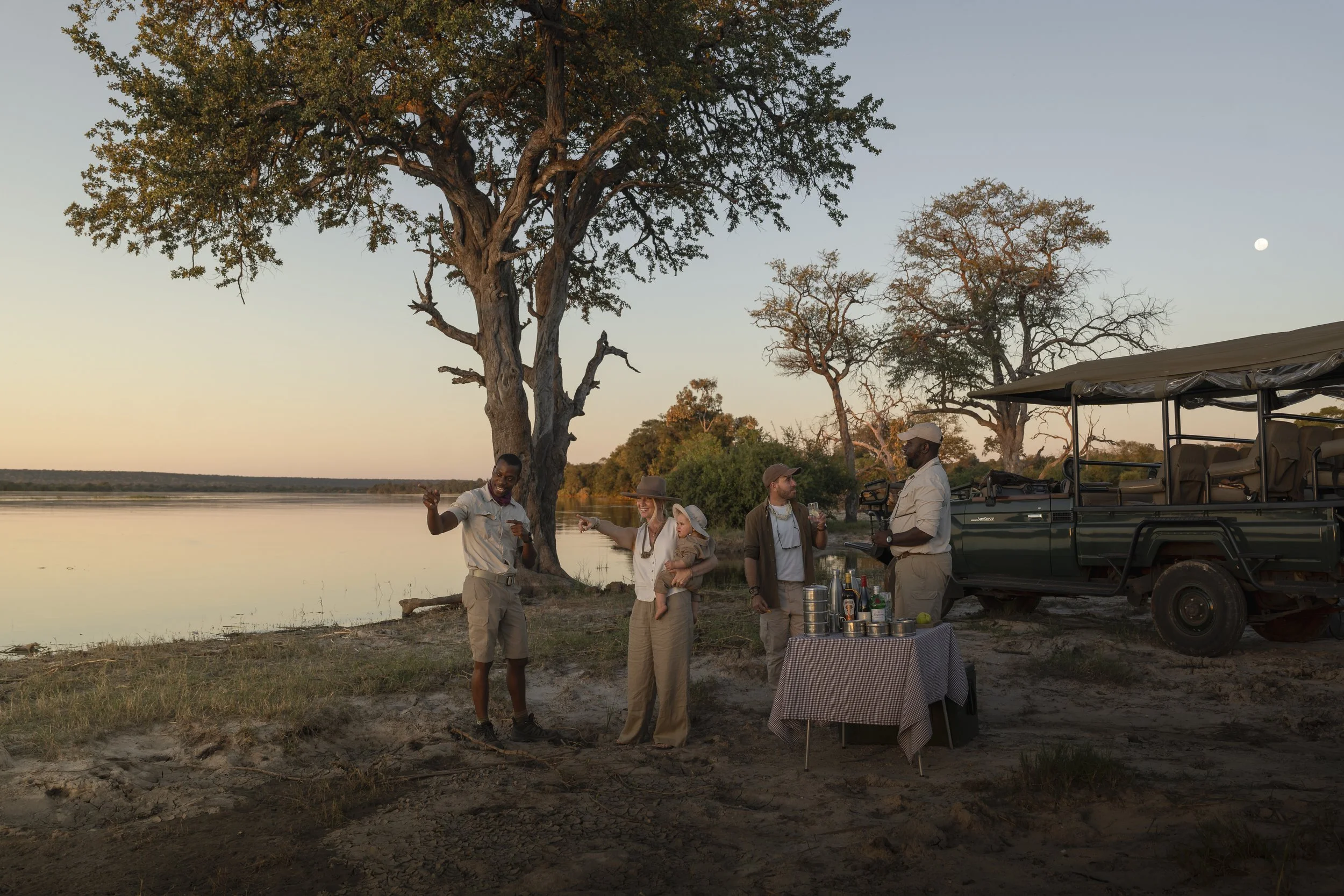
Nobody checked a watch. That was the whole point.
Meal times are when you want them to be. Menus are interpreted for little people. Snacks are always on hand. Water bottles are accessible and filled. And you get a choice about how you eat. She eats early and misses boma night, taken off to the kitchen to test the menu with the staff while you sip a sherry by the firepit. Or she stays up and comes to the table with you. A lodge built for families gives parents that choice, and doesn't make you feel you've asked for something unreasonable in taking it.
One of our most memorable safari schedules with Bradley was in Victoria Falls, Zimbabwe. Right from the word "Mhoro", hello in Shona, we were asked whether she had a routine. At that point she was on two naps a day and needed to be fed constantly. The lodge made sure that when we came in for brunch her omelette was already there, and back in our suite there was a constant refresh of fresh fruit and snacks. Our game drives needed to end early for a six o'clock dinner, and hers was served as we climbed down from the vehicle. They never rushed us through our own meals. Her needs came first and ours came next, and nobody made that feel like a compromise. Even our guide and tracker were on board with the hungry baby, packing her little snack box for the morning and evening drives.
We left feeling like we'd had a holiday.
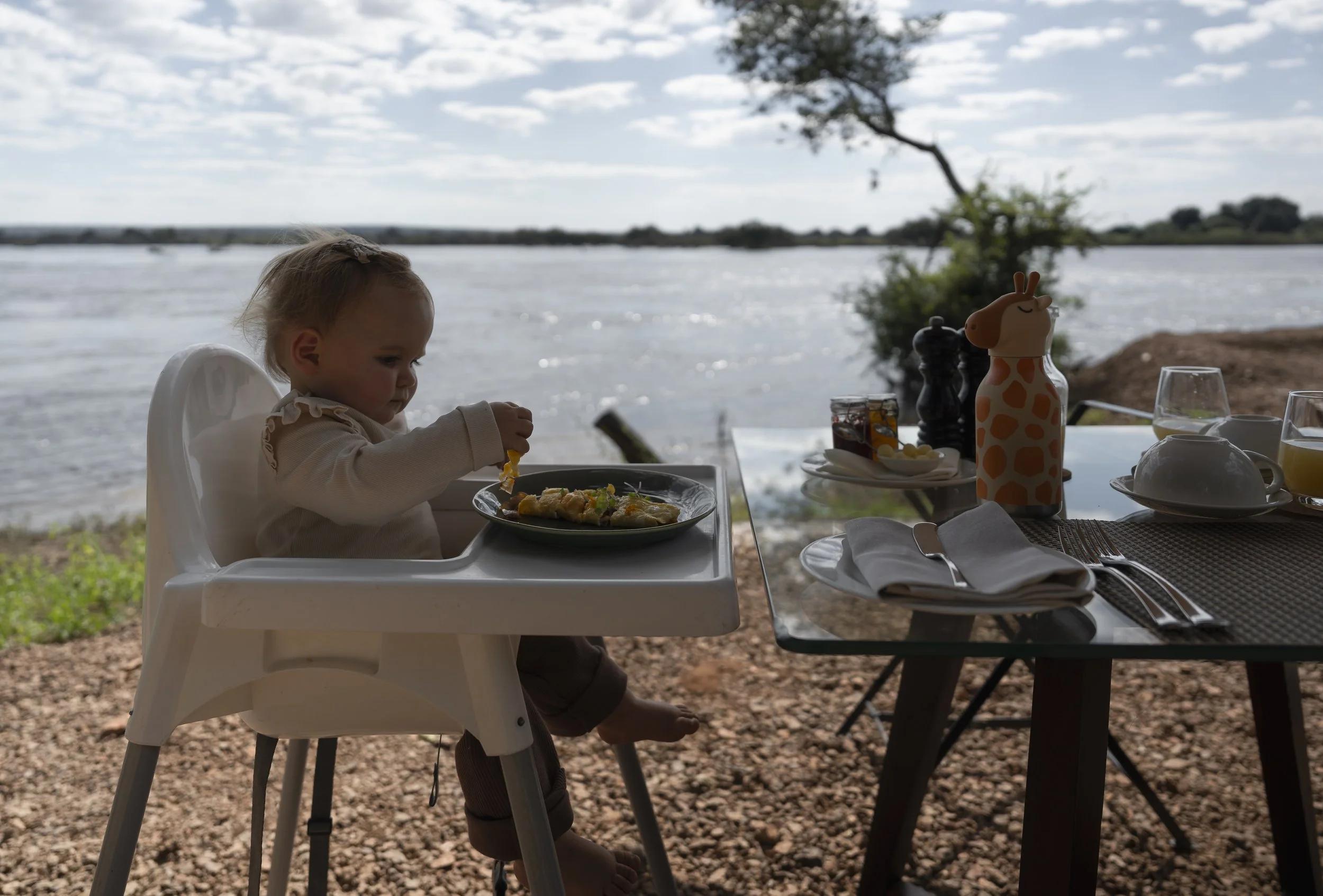
Her omelette was already there. Ours came next.
Do Safari Lodges Have Kids' Programmes?
The afternoons are longer than you think.
Yes, though they aren't a traditional part of safari and they're fairly new to the industry. It's one of the first questions our international clients ask, and they're one of the quickest ways to tell how seriously a lodge has thought about families. The honest answer is that a handful of safari companies do kids' programmes exceptionally well, and plenty of genuinely family friendly lodges don't run one at all. What those lodges have instead is staff who will happily spend the afternoon with your children, which is often the same thing arriving by a different route.
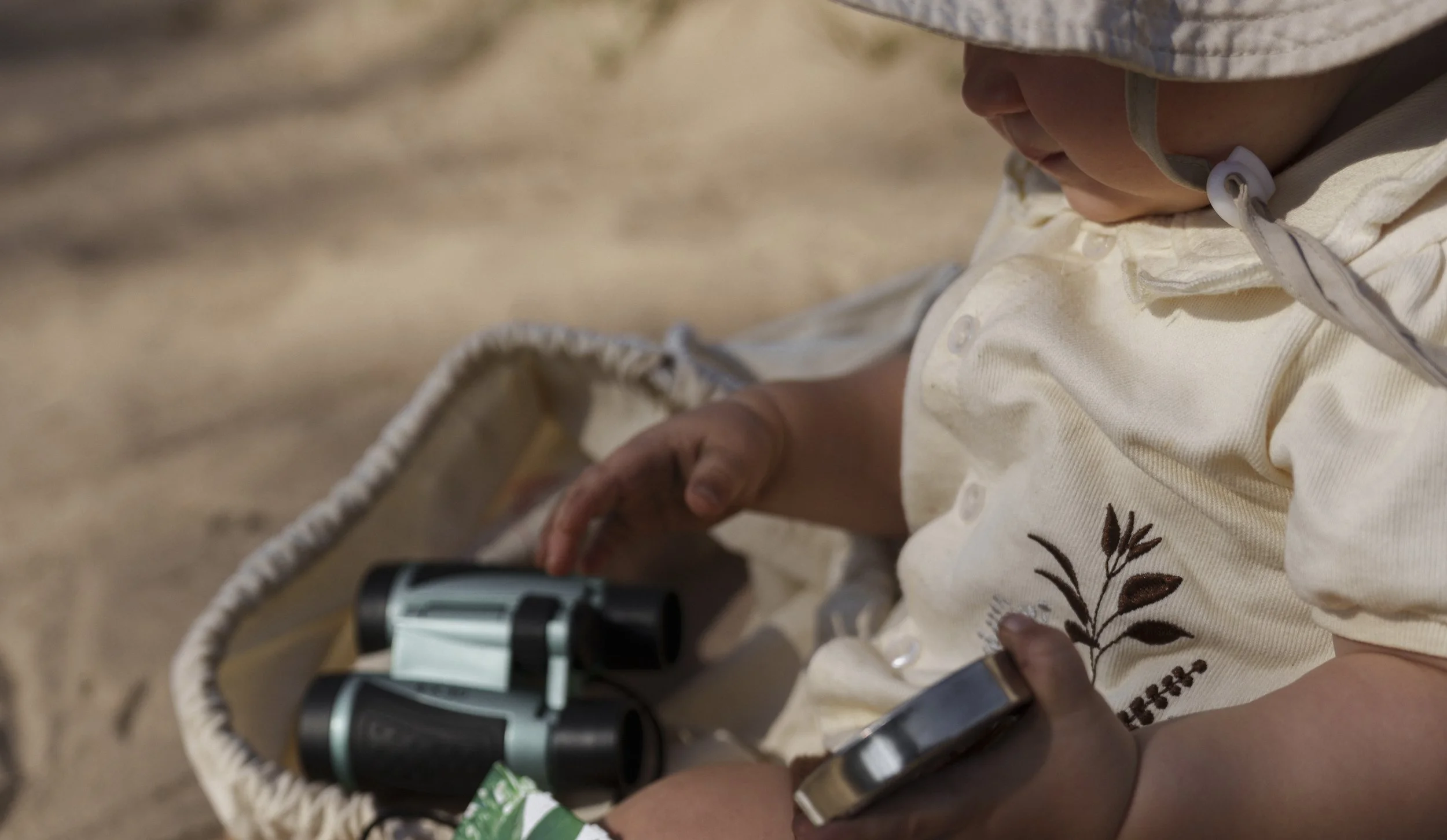
The pack was waiting before we were.
Programmes vary from lodge to lodge, and from day to day, but the shape is usually similar. The ones that have really thought about it will have a welcome pack waiting in the room on arrival, with binoculars, a sightings book, a compass and a cap. Then a choice of things across the days, one at a time rather than all at once. A mid-morning bumble with a dedicated guide, out to find tracks and learn a bit of bush. An hour in the kitchen with the chef making biscuits. A slow walk around the lodge perimeter with everything explained twice.
At a lodge in South Africa there was a little room set aside for children, and they'd take Bradley off to paint whenever we wanted an hour. One afternoon they offered to take the children out and let them paint one of the game vehicles. Nobody had asked. That's the part worth noticing, a lodge that works out you might need a break before you've had to say so.
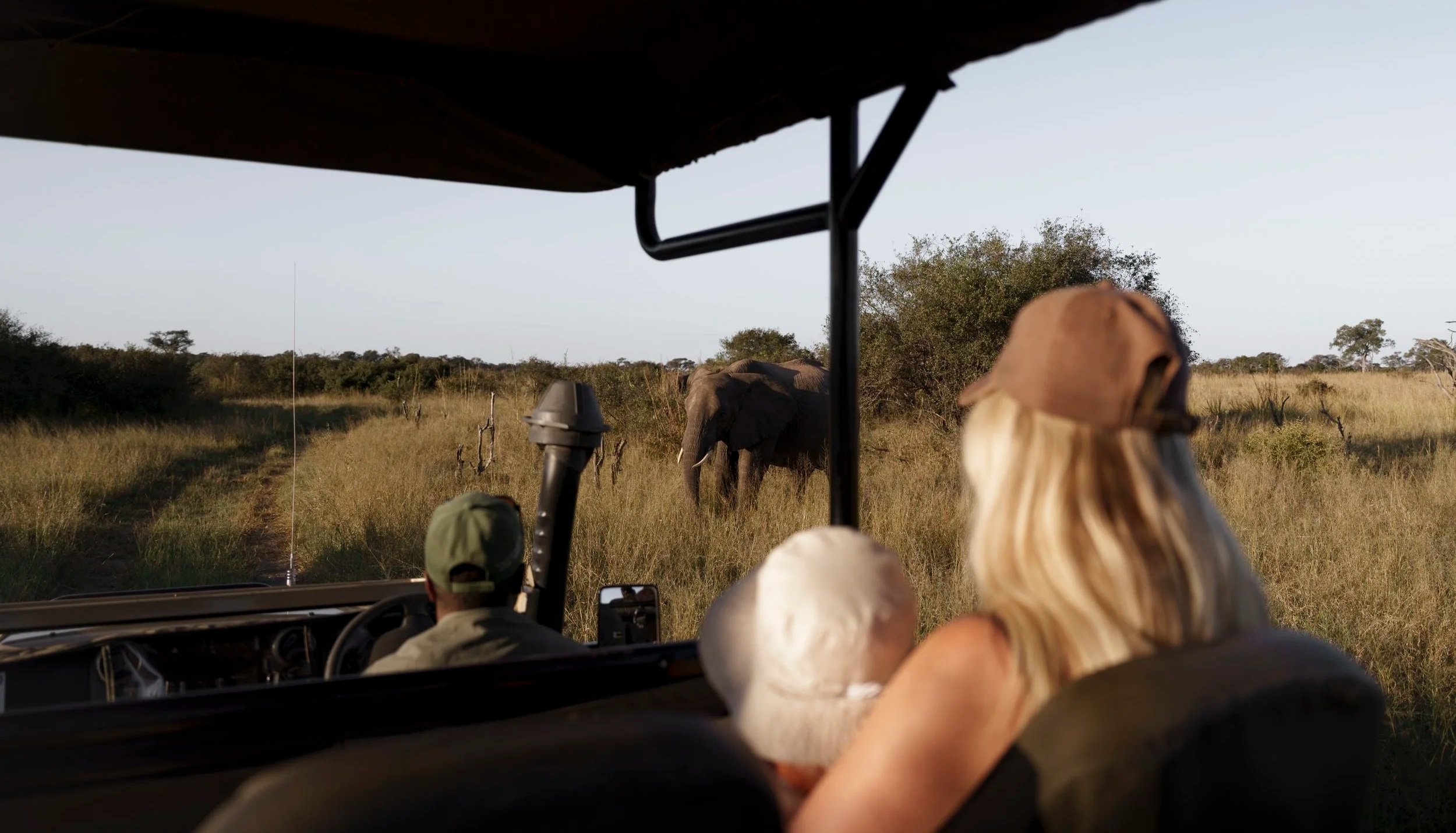
This is what she gets instead. It's better.
Bradley is still too young for most of it. What she gets instead is someone picking her up and walking her round the lodge to spot what she calls the naughty vervet monkeys, eyeing out the freshly baked bread from the trees, or the nyala that live in the bushes at the edge of camp. Because the truth is that the afternoons are the long part. You have eaten, you want to lie down, and there is a small person who has just woken up full of ideas. The staff are always ready to whisk her off to explore something, which is usually the point at which we finally get to tick a few birds off our list. Helping hands that arrive without being asked for is one of our favourite reasons why safari is our favourite kind of holiday with a child.
So a lodge without a programme isn't less family friendly. But the ones that have built one tend to do it properly, and it changes what the middle of your day looks like.
Family Suites and Villas on Safari: What to Look For
The family suite problem.
Family suite is the least regulated phrase in safari marketing. It can mean two rooms with a connecting door, or a space genuinely built around a sleeping child and awake parents. Having designed safaris for clients with children of every age, this is the most common question I get asked. What does the room configuration look like? There's a real difference between two children aged four and six who can each sleep in their own bed, and a family with a toddler and a four year old, where one needs a cot and one needs a bed.
What the configuration tells me is how family oriented that family suite really is. Was it a villa ten years ago, quietly renamed when the industry decided twelve year olds could share a walkway and nobody needed checking on? Or was it built in the last five years, when family safaris pulled connected suites under one roof?
One of the bigger conversations I have with parents is about who sleeps where. Often one parent takes one child and the other parent takes the other, which means both the main suite and the children's room need the option of a double bed, with singles available if that isn't how the family works.
Cots should be standard for children under two. We watch for lodges that say "on availability", because a lodge built for families does the maths at the time of booking and confirms whether a cot is needed. Every family we book has different requirements and a different budget. A villa where everyone is under one roof might be right for one trip, and completely wrong for a family moving between multiple camps who just need a family unit.
Knowing the difference between interconnecting and adjoining rooms matters too. I'll always request a floor plan for a lodge we haven't yet visited, to work out whether Bradley needs her own space. It's just as useful for clients, because it gives them the lay of the land and lets them configure the suite around how they actually sleep. A family friendly lodge is set up with families in mind. Not all of them see the detail the way a mother would.
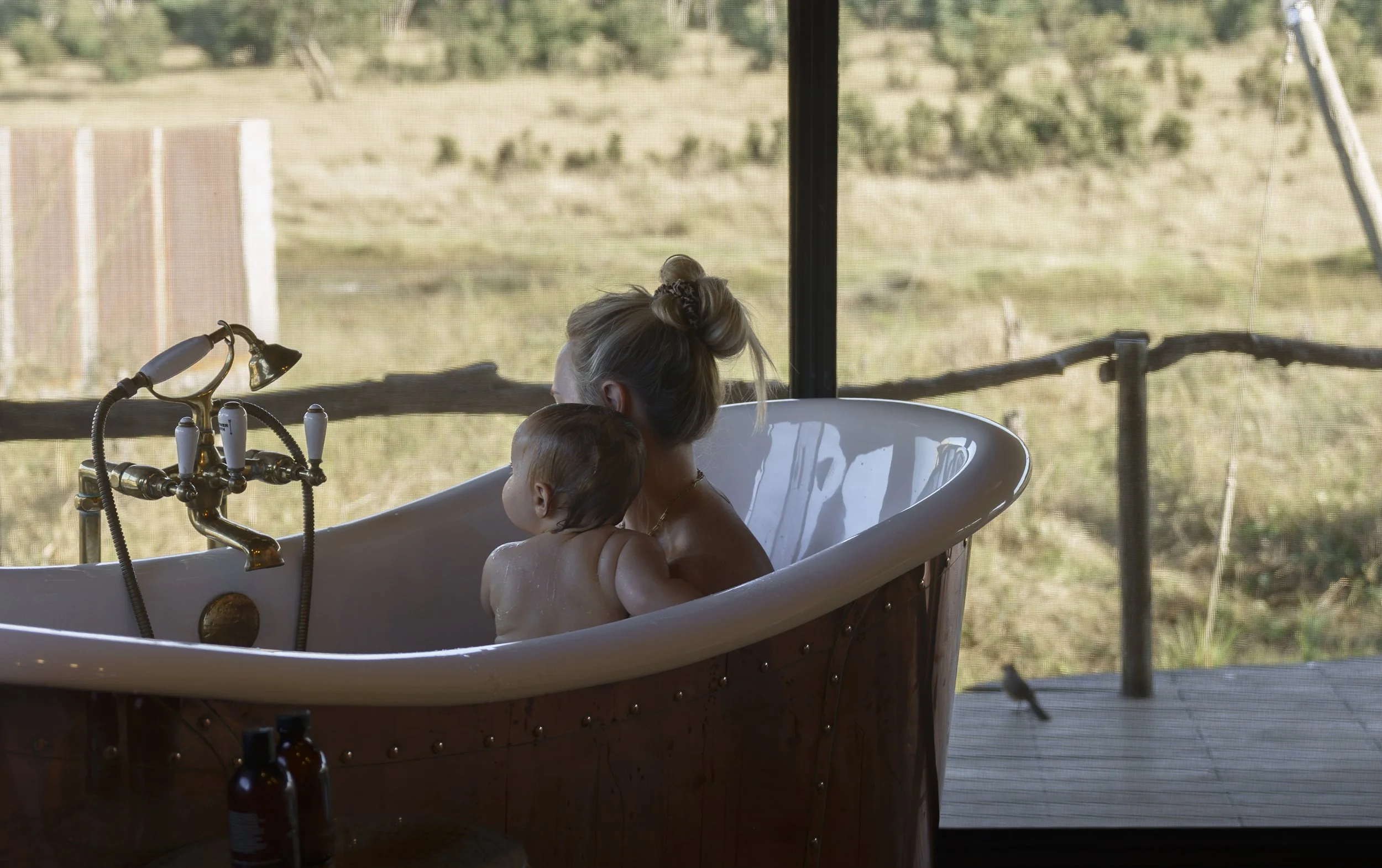
Closed to the outside. Never closed off from it.
Then there's the question of what happens once she's asleep. Most luxury lodges have a rule about no movement outside after dark, which changes the shape of your evening entirely. So we'll usually recommend a babysitter comes to the room and sits with your child while you go back to the main lodge and enjoy the rest of the night. Villas solve this differently, with doors connecting the rooms so parents can carry on in the main living area while the children sleep. With family units, we'll always ask about your child's sleeping habits, and whether you'd rather have a door between you or are happy with a sitter. That answer tells us which lodge to put you in. And most rooms have wifi, so your monitor will work exactly as it does at home.
It's very rare to find a family unit with a fenced pool. That's the truth. But a cleverly designed family unit will have enough indoor space, with mesh sliding doors that keep the outside flowing into the room, so even when you aren't standing at the pool watching, you know there's no point of entry once those doors are closed.
There's one lodge that genuinely surprised me with its dedication to being a family lodge, and whose configuration was so unfriendly I wouldn't recommend it to any client with children under twelve, whatever their all-ages policy says. Open suspended walkways with no railings. A plunge pool straight off the main living area. The whole lodge elevated, with a single rail around the suite perimeter. As an agent that's never going to make my list, purely because of the liability I'd be handing my clients. The aim for every House of Wild booking is to take stress away from parents, not add it.
Villas versus family suites, and what the difference actually is. Villas are fast replacing family suite as a name. Traditionally a family suite is an adjoining room, with all meals and activities still happening at the main lodge. Villas are now sold as the option for four or more guests who want connected rooms, with a private kitchen, lounge, dedicated vehicle, butler, chef and pool attached. It's become the trend at lodges that haven't historically been family friendly and are now opening the door, while making it very clear there's no crossover with guests travelling without children. Both work. Villas simply sit at the higher end of the price bracket.
My hesitation with villas at previously adults-only lodges is the experience for the children themselves. Which is exactly where we come in, testing the whole thing rather than letting a client pay for a beautiful bush house with an adults-only guide attached to it.
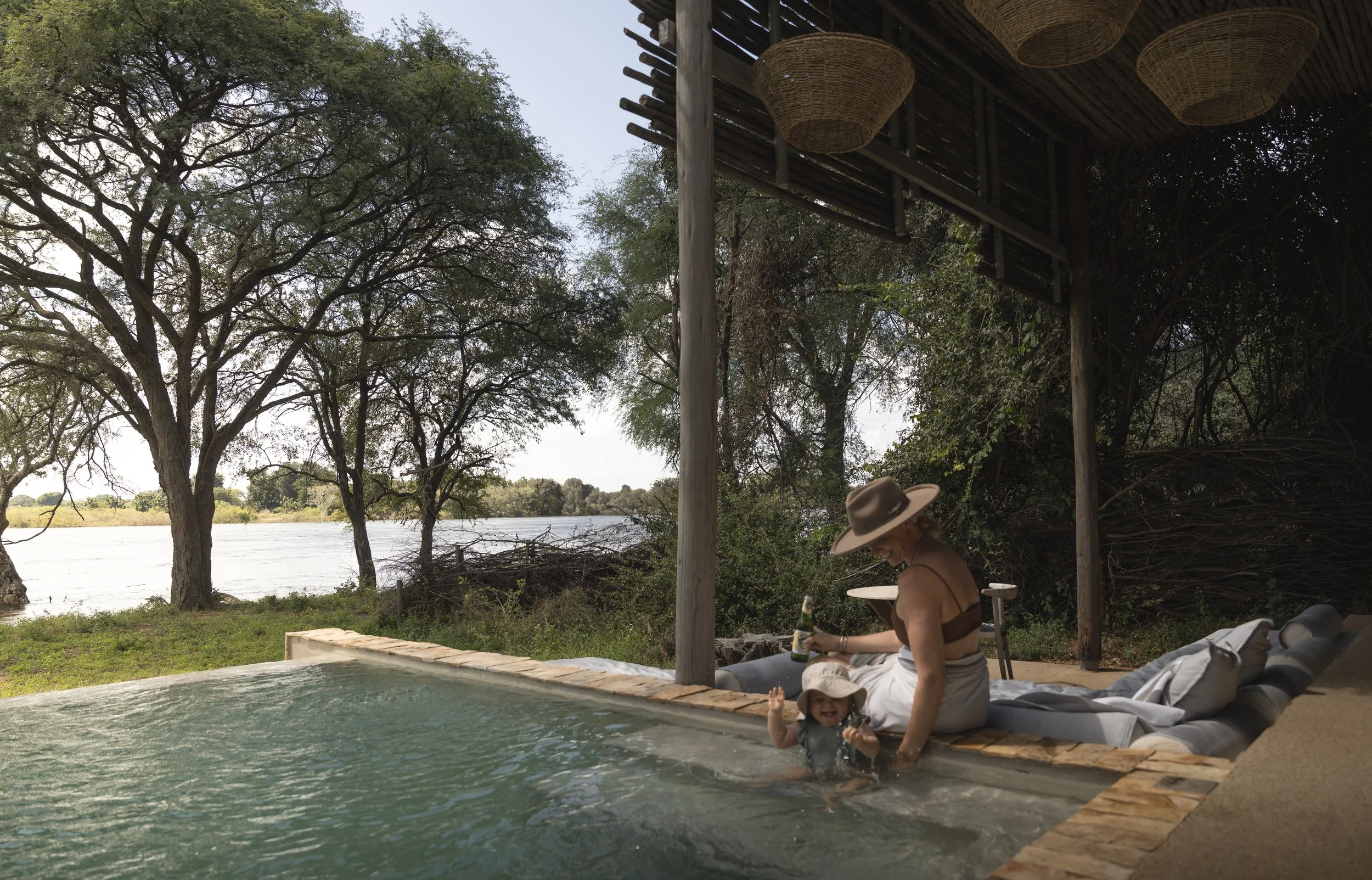
No fence. No barrier. Which is precisely why we never look away.
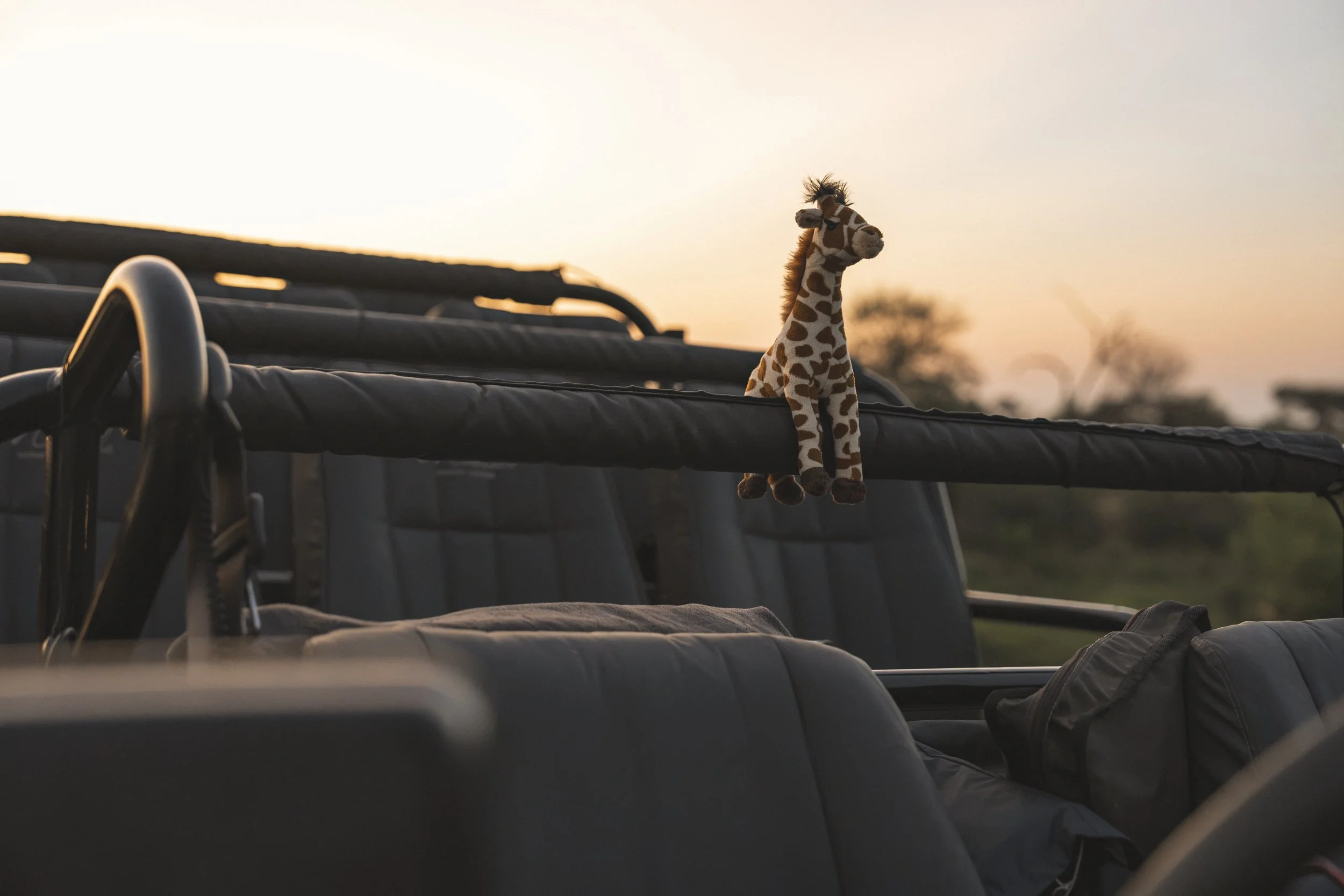
There really is nothing more heart warming than walking into a room and finding a space that belongs entirely to Bradley. Her cot turned down, a mosquito net over it, a plush toy waiting to be tucked in with her. The whole thing feels thought about, and the smallest detail, an evening turndown for our daughter, becomes the thing we take home.
Family Safari Questions, Answered
Before you book, the questions worth asking.
What age can kids go on safari?
At House of Wild we specialise in family safaris from six months to six years. Our aim is to find lodges that can do this age group well, because if they can get this right, then any age above it is going to be looked after. But it depends on the lodge, and the number they publish tells you more than they realise. Some won't take children under six. Others set it at eight, and a few hold out for twelve. But a lodge that accepts children from birth and has thought about what that means is offering something entirely different from one that opens at six and has nothing in place beyond permission. Read the age as a statement of intent rather than a rule.
Can you take a toddler on safari?
Yes, and we do it regularly. The question isn't whether she's old enough. It's whether the lodge has been built for her, and whether you have a private vehicle so she can actually be with you.
Do you need a private vehicle on safari with children?
For anyone under six, usually yes, and not for comfort. It's the difference between your child being on the drive and your child staying behind. Most lodges with a minimum age will waive it for a private vehicle or an exclusive use booking, because the objection was never really about your child. It was about the three other guests.
Are safari lodges safe for children?
Many are. Some are beautiful and would keep you awake all night. Unfenced decks, open walkways, a plunge pool off the living area. It's rarely mentioned on a website and you can't assess it from a gallery of photographs, which is why we ask for floor plans and why we go and look.
That first arrival taught me what to look for, though it took a few more trips to work out how to describe it. Nothing had gone wrong. The lodge was warm, the staff sang, and the welcome had simply been arranged for the wrong number of people.
Since then I've stood in a lot of receptions with a nappy bag on my shoulder. The good ones are unmistakable. Somebody crouches down. Somebody asks her name before they ask mine. The drink comes with a small one alongside it, and the whole thing takes a few seconds and costs the lodge nothing at all, because somebody decided it should happen that way before we ever booked.
That's the difference, and it's the only one that matters.
Acceptance isn't the benchmark. Design is.
We've already done the work of finding the lodges that get this right. If you'd rather not find out the hard way.
Written by Jemma Park
Founder of House of Wild, qualified safari guide, photographer of Jemma Wild and mother. Having travelled extensively across Africa both professionally and now as a parent, she specialises in designing luxury safaris for families with young children.
