

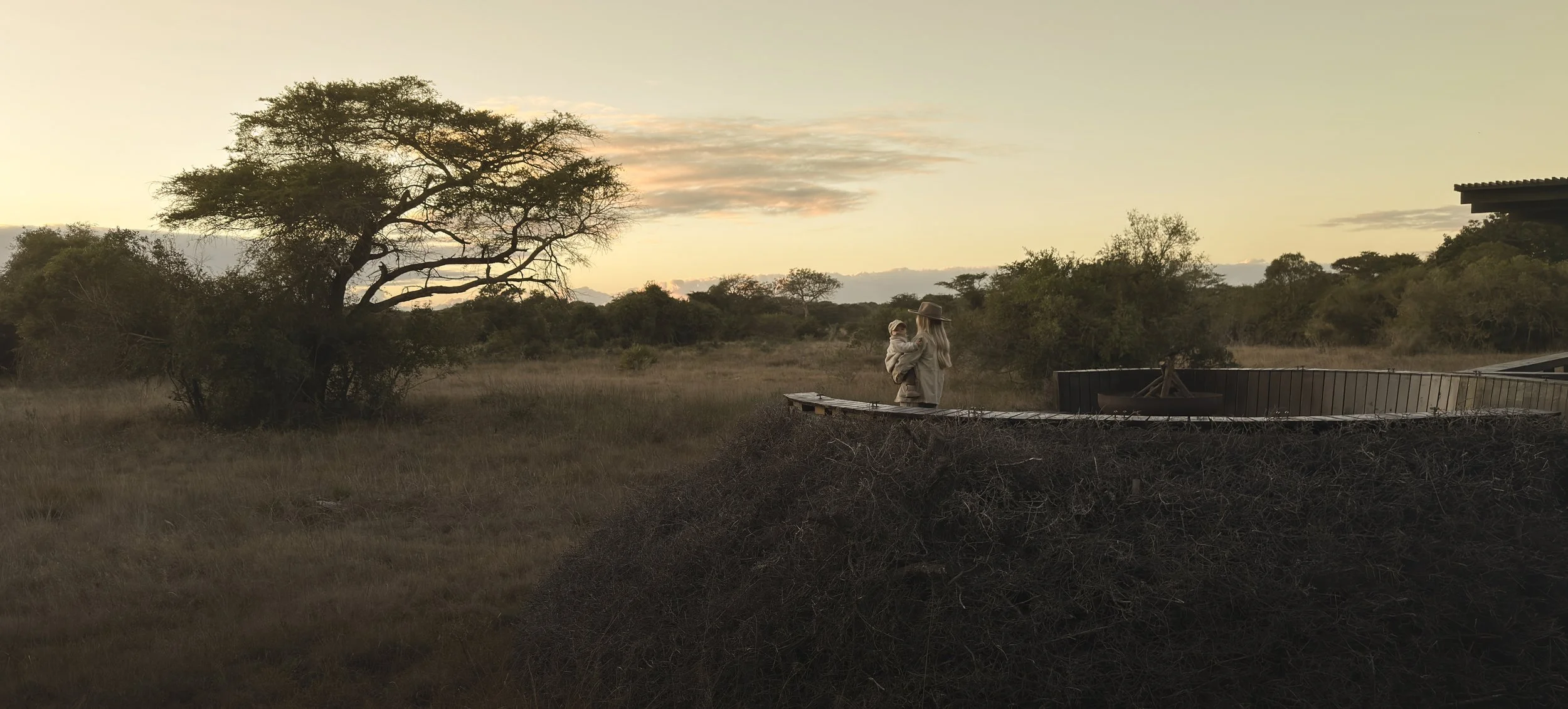
How I Assess a Property
EVERY LODGE IS ONE I KNOW, NOT JUST READ ABOUT.
That connection looks different depending on the place. Some I have stayed in with Bradley, and those are the ones I know inside out because I have watched how a camp behaves when a small child is actually in it. Some I knew long before I was a mother. I know the land, the team and the way the camp runs. Others belong to groups whose standard I have tested enough times to trust what they stand for.
I travel constantly because seeing hospitality done properly keeps my own eye sharp. I also go when something does not quite add up. If the way a place presents itself and the way it reads to me are not the same thing, I would rather find that out myself than have a family discover it after flying across the world with a toddler.
These are the things I have come to notice most over the years. They are what matter to me when I am looking at a lodge for families, and the standard I hold myself to when deciding where to place one. Because if I am sending a family there, I need to believe in the experience waiting for them.
What I Look For
The safari itself
The wildlife experience still has to be exceptional. I do not place a family somewhere simply because it is easy with children. I look at the quality of the guiding, the reserve, how vehicles move through it, seasonality and what a family is realistically likely to experience while they are there.
A beautiful family suite cannot compensate for an underwhelming safari.
01.
How children actually access the safari
This is one of my first questions, because lodge policy and lived reality are often very different.
What age can a child join a game drive? Is a private vehicle compulsory, available, or merely "subject to availability"? Can drive times move around naps, meals and tired children? What happens if a two-year-old lasts forty minutes rather than three hours?
For young families, flexibility around the vehicle is fundamental.
02.
The guide
A private vehicle only solves half the problem. The person sitting at the front matters enormously.
I look for guides who understand children without turning the safari into children's entertainment. Someone who can read when to stop, when to move on, when a beetle is more interesting than another lion, and when the parents desperately want ten quiet minutes at a sighting.
The best family guides protect everyone's experience.
03.
The people and the culture of the lodge
You can tell very quickly whether a property genuinely likes having children there.
I notice whether the team speaks to the child, whether parents are constantly having to ask permission, and whether the atmosphere changes when a toddler walks into a beautiful space.
Children do not need to be fussed over. They need to feel that they belong there.
04.
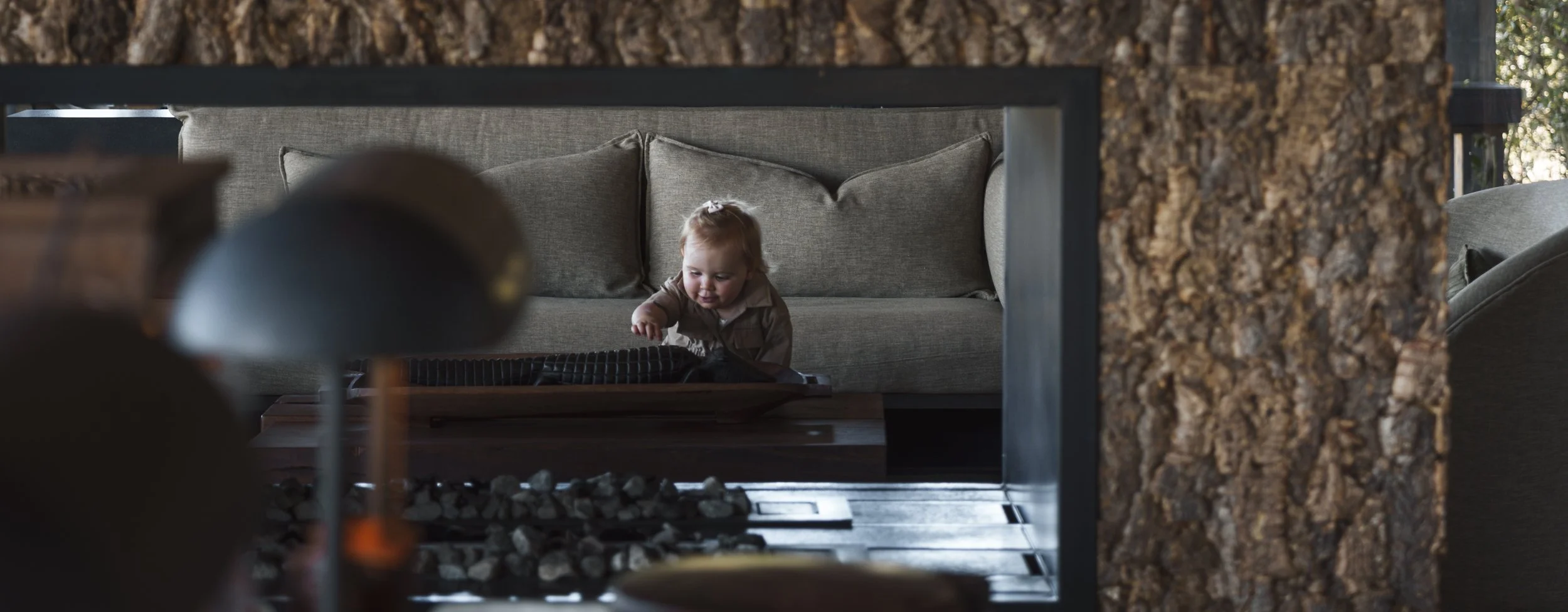
How the accommodation works as a family
"Family suite" can mean almost anything.
I look at where everyone actually sleeps, whether parents can stay awake after bedtime, the distance between rooms, bathrooms and baths, stairs, pools, decks, canvas walls, noise and how easily a parent can move around at night.
I am less interested in the floor plan on the website than in what that floor plan feels like at 2am with a waking baby.
05.
The rhythm of the day
Small children do not suddenly stop needing food, sleep and downtime because they are on safari.
I look at how easily a family can eat early, whether breakfast can happen after a shortened drive, where naps happen, whether there is somewhere pleasant to spend the middle of the day, and how much the lodge is willing to adjust without making every request feel like an exception.
This is often what separates an easy safari from an exhausting one.
06.
Safety, and what happens when something goes wrong
Safari lodges were not designed to be childproof, nor should they be.
I look at the realities instead. Open water, plunge pools, elevated decks, unfenced camps, wildlife moving through camp, room location, paths after dark and how closely adults will realistically need to supervise.
I also ask the question most families are thinking about and few ask out loud. What actually happens at nine at night with a child running a fever. How far the nearest doctor is, whether the camp has dealt with a sick child before, what the evacuation arrangement is and how quickly it moves after dark. The answers vary enormously between properties that look identical on paper, and a manager who answers that question precisely tells me a great deal about the whole operation.
The question is not whether a lodge is perfectly safe. It is whether the risks are understood, properly managed and appropriate for that particular child's age.
07.
Getting there, and getting on
A property does not exist in isolation.
I consider how the family gets there, flight times, luggage restrictions, the reliability of connections and what happens when the lodge forms part of a longer itinerary. A spectacular camp can still be the wrong choice if reaching it requires a travel day that is completely unreasonable with an eighteen-month-old.
Sometimes the right lodge is the one that makes the whole journey work better.
08.
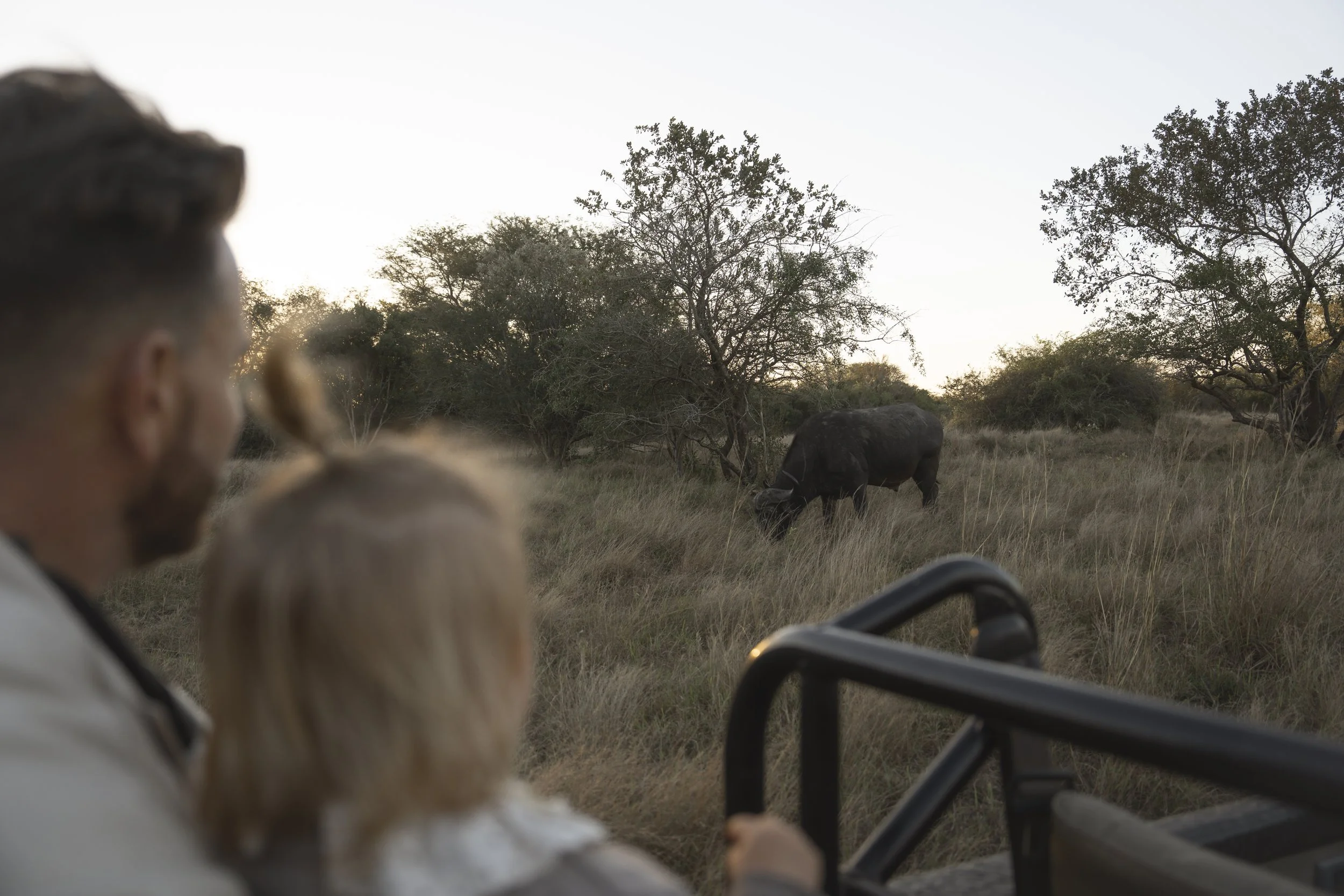
What shifts with age
None of this is a fixed standard. What matters most moves as a child grows, and a property that suits one family beautifully can be the wrong answer for the same family eighteen months later.
-
They are not yet mobile, so the physical site matters less. The room matters more. This is often the easiest age to let the safari shape the day.
-
Once they start moving, the property changes. Water, decks and room location matter far more, and the rhythm of the day needs to work around sleep.
-
Now the people matter most. A toddler is a presence in camp, not a passenger. The guide, the vehicle and the way the team responds to them shape the whole stay.
-
The safari starts belonging to them too. Guiding matters in a different way now. I look for a lodge that lets their curiosity grow naturally, without turning the experience into a children’s programme.
The brackets are only a guide. Tell me your child’s age, and I’ll tell you what I would pay closest attention to.
What would rule a property out
Very little disqualifies a property outright. Most of what I assess is a matter of fit, and a place that is wrong for one family at one age can be exactly right for another.
There are three exceptions:
-
Water at the level of a walkway. Unprotected drops. A layout where the only thing standing between a mobile child and something serious is an adult paying attention every second of the day. Supervision is part of every safari with a small child. It cannot be the entire safety plan.
-
This shows itself in the first hour and it never resolves. An owner can be enthusiastic and a management team can quietly not be, and the family feels it long before anyone says anything. No policy fixes this, because it is not a policy.
-
If I ask something specific about how children are handled and I get a brochure line back, that tells me either they do not know or they would rather not say. Either way, I cannot make a decision for a family on an answer I do not trust.
-
I was waiting on a new camp recently, built by a group I have a lot of time for, and I had assumed it would be one for families. When I asked, they told me they had settled on thirteen and up. They had looked hard at the site and decided they could not do it properly for younger children.
That is not a property falling short. That is a group taking children seriously enough to say no, and it is exactly why I keep working with them. The lodges I worry about are the ones that say yes before they have really considered what yes requires.
What this page isn't
This is not a scorecard, and I would rather you did not read it as one.
A property meeting most of what is above still might not be the place I put you. Ownership changes. Guides move on. A camp that felt right in a green season can feel very different in the heat. I reassess before I place a family, every time, and what I write here reflects how a place stood when I was last in it.
If you have a region in mind, or a property you have already fallen for, tell me. I will give you a straight answer about it, including when the answer is that I would send you elsewhere.