

Can You Take a Baby or Toddler on Safari?
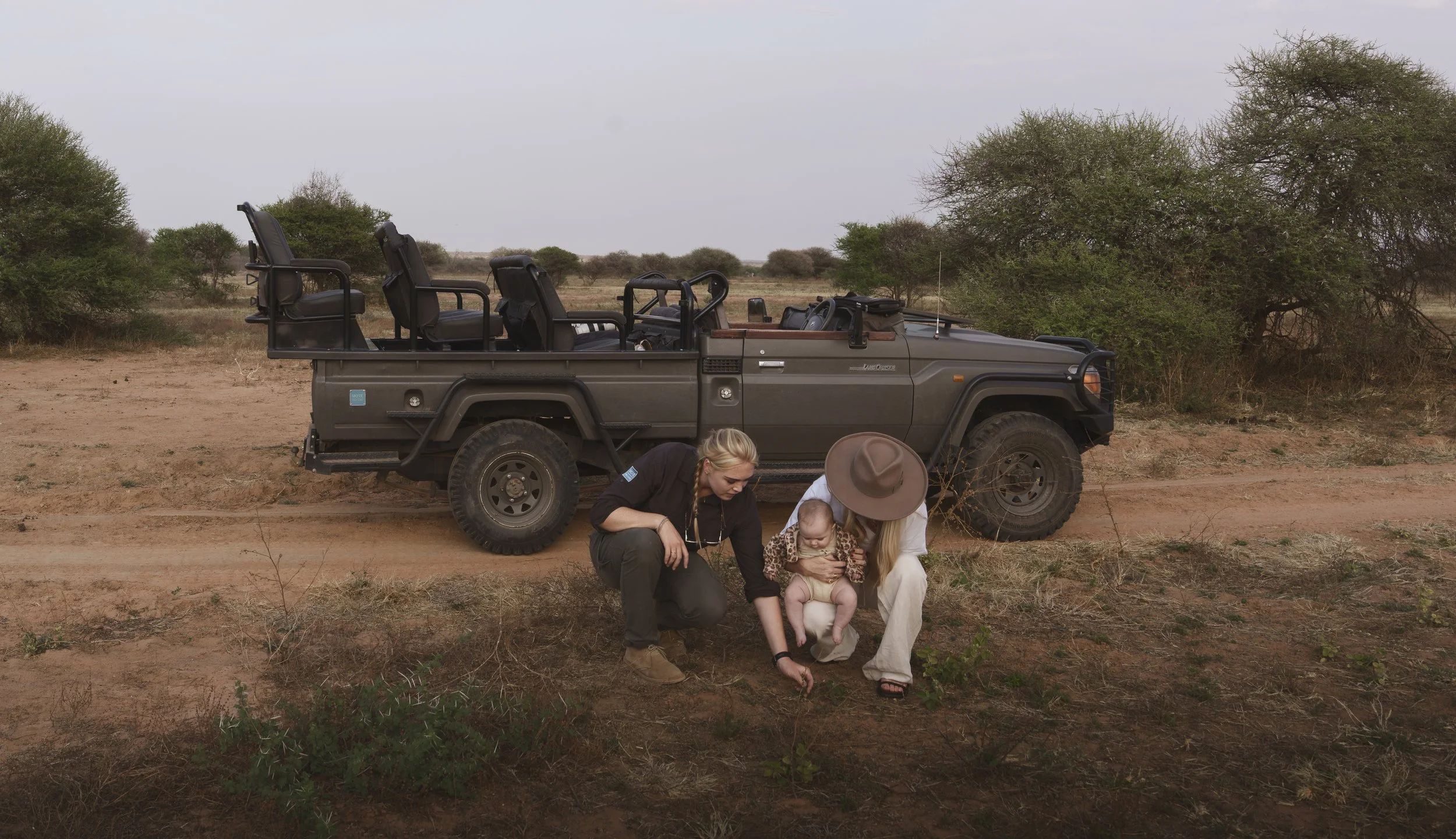
Nobody ever tells you outright not to have children in this industry. They just say it in other ways.
They won't remember it. Safari isn't built for kids. Where would you even take them? You'll have to put the camera down for a few years.
I believed more of it than I should have.
I've worked as a photographer in the safari industry for over seven years. I did my FGASA guiding qualification along the way, not to guide, but because I wanted to understand what I was photographing. My work has taken me from the waterways of the Okavango to the plains of the Masai Mara, moving between some of Africa's most remote safari lodges without giving it much thought.
For years, I assumed having a child would put that life on hold.
Then I got pregnant, kept working, and started asking a different question.
Why can't I do this with my child?
When my daughter was two months old, she went on her first safari. From then on, I started noticing which lodges simply catered to families, and which had genuinely considered what travelling with a baby or toddler requires.
So, can you take a baby or toddler on safari?
You can. Age is only part of the question.
It isn't whether she's old enough. It's whether the trip has been built for her.
Is Safari Safe for a Baby?
The safari experience I lived for was the one where guides drove you up close, where you felt the vulnerability of a leopard almost brushing the car with its spots, or an elephant reaching out its trunk to get a sense of who was seated where. Bundu-bashing through the bush to get to a sighting. The unfenced camps, the more remote the better. Lying in bed listening to the whoop whoops of hyena at night, or the rasp of a leopard making its way past your tent, with nothing but canvas between you and the wild.
As a parent, this genuinely gives me a nervous breakdown.
How am I supposed to take my child into a place like that? What about the heat of summer, which cues the mozzies and the risk of malaria? Are there doctors on site? How remote are we actually going? A parent's worry is real.
If you had asked me whether safari is safe for a baby five years ago, I would have said only for the brave ones. Today I understand what the question actually means. It isn't about being brave. Your concern is completely valid. It's about knowing where to go and how to do it.
And when parents ask me if it's safe, most of them are asking about malaria. They're just too polite to say so.
I've done this as a parent, with my own daughter, in the places I'm sending you. That's one of our rules at House of Wild. We don't send you anywhere we haven't been ourselves.
The goal is a safari that gives up nothing on experience and nothing on safety. From the very beginning.
What About Malaria?
When I started House of Wild I was pregnant, and the word moved from the back of my mind to the front. Our first trip was to Zambia, along the Zambezi River, because I had a photography job I didn't want to cancel. I read what I could find, I knew it had been a very dry season, and I took every precaution available to me. Repellent as my bush perfume. Covered up at dawn and dusk. Nets and fans confirmed with the lodge before we arrived. I felt safe, and we were fine.
What changed after that trip is that I stopped treating "low risk" as a phrase and started trying to understand what it means.
Here's the short version. Malaria-free is a place. Low risk is a place and a month. One of those doesn't change. The other changes every year, depending on what the summer did.
Which is why I won't hand you a list of malaria-free regions and call it the family answer, the way most of the industry does. The season does more work than the map, and there are low risk regions in winter I'd choose over any malaria-free reserve in the country. That's a longer conversation and it has its own place, here.
What I will never do is tell you what your child should take. I'm not a medical professional, I'm a qualified traveller, and that's a different thing entirely. I'll tell you where I'd go and in which months. You take that to your doctor and let them tell you what it means for your family.
With Bradley under two, the thing that worried me wasn't the map. It was that she couldn't tell me something was wrong. So we travelled in dry winter months, took every precaution, and asked the medical questions before we booked anything rather than after.
If you'd rather carry no risk at all, that's completely reasonable and I won't argue you out of it. Tell me, and I'll build the best trip that exists outside the transmission zone.
Flying to Camp With a Small Child
Almost every family I speak to has the same question about the light aircraft, and it isn't about luggage. It's whether these things are safe.
So let me start there.
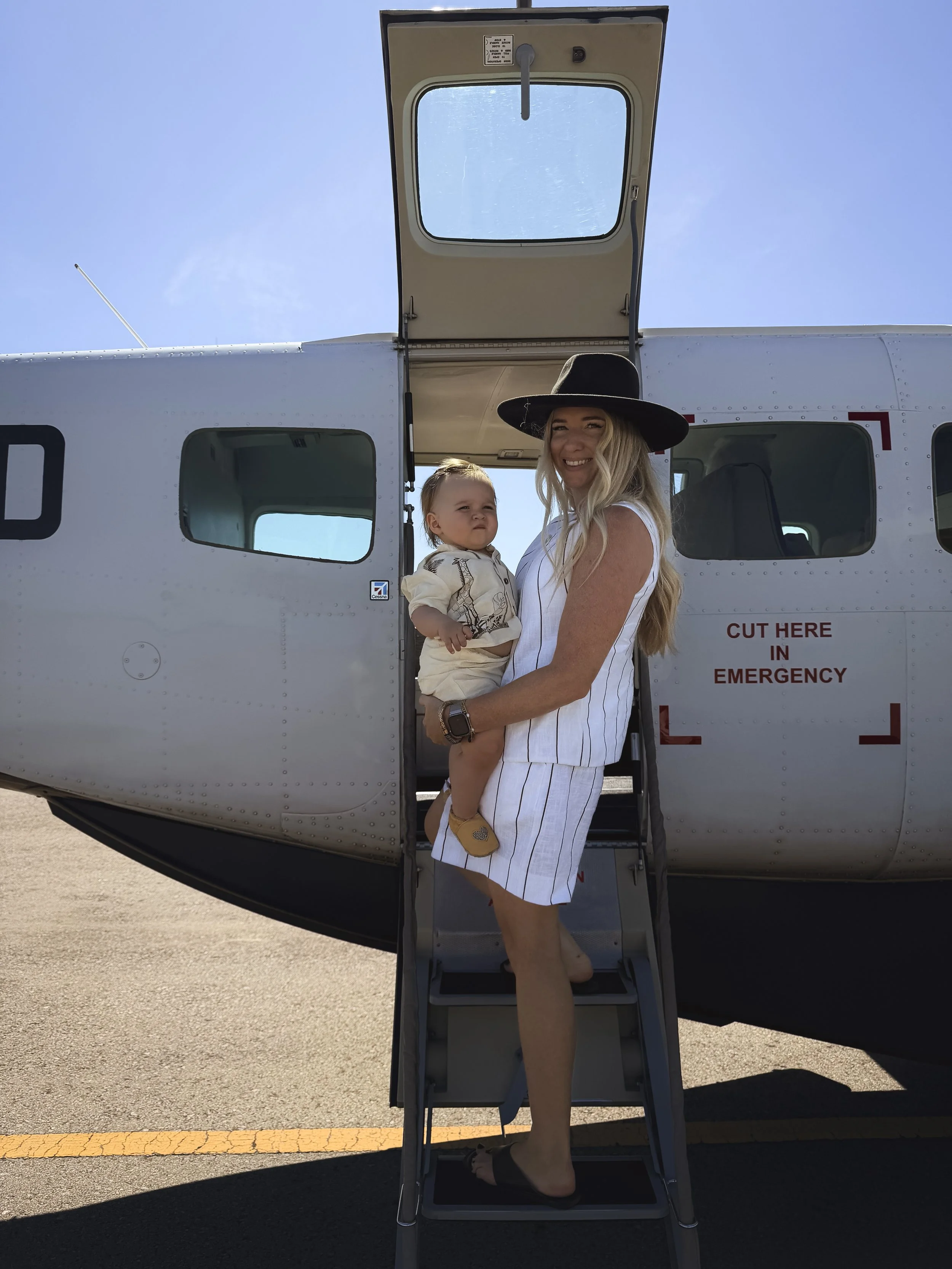
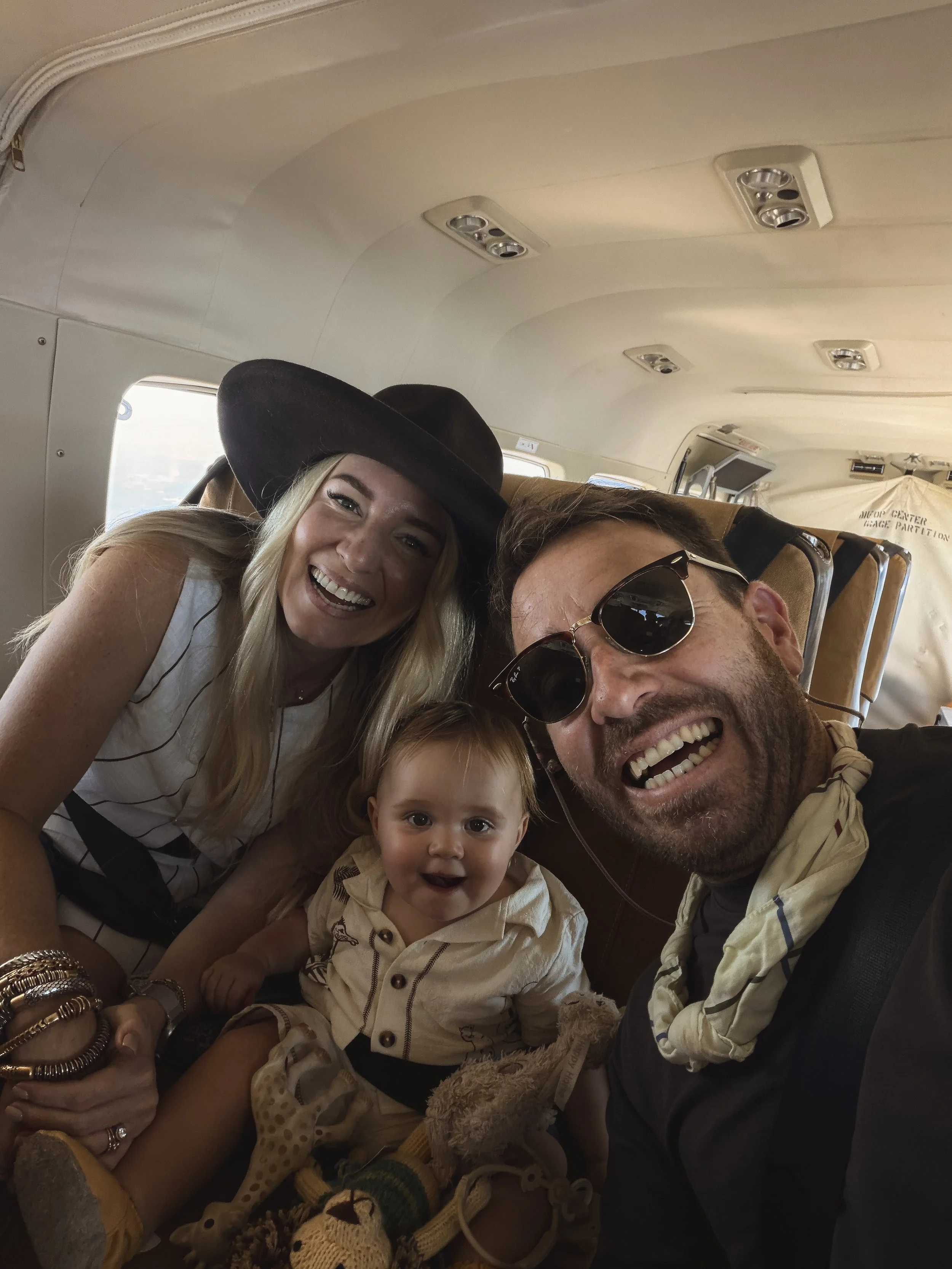
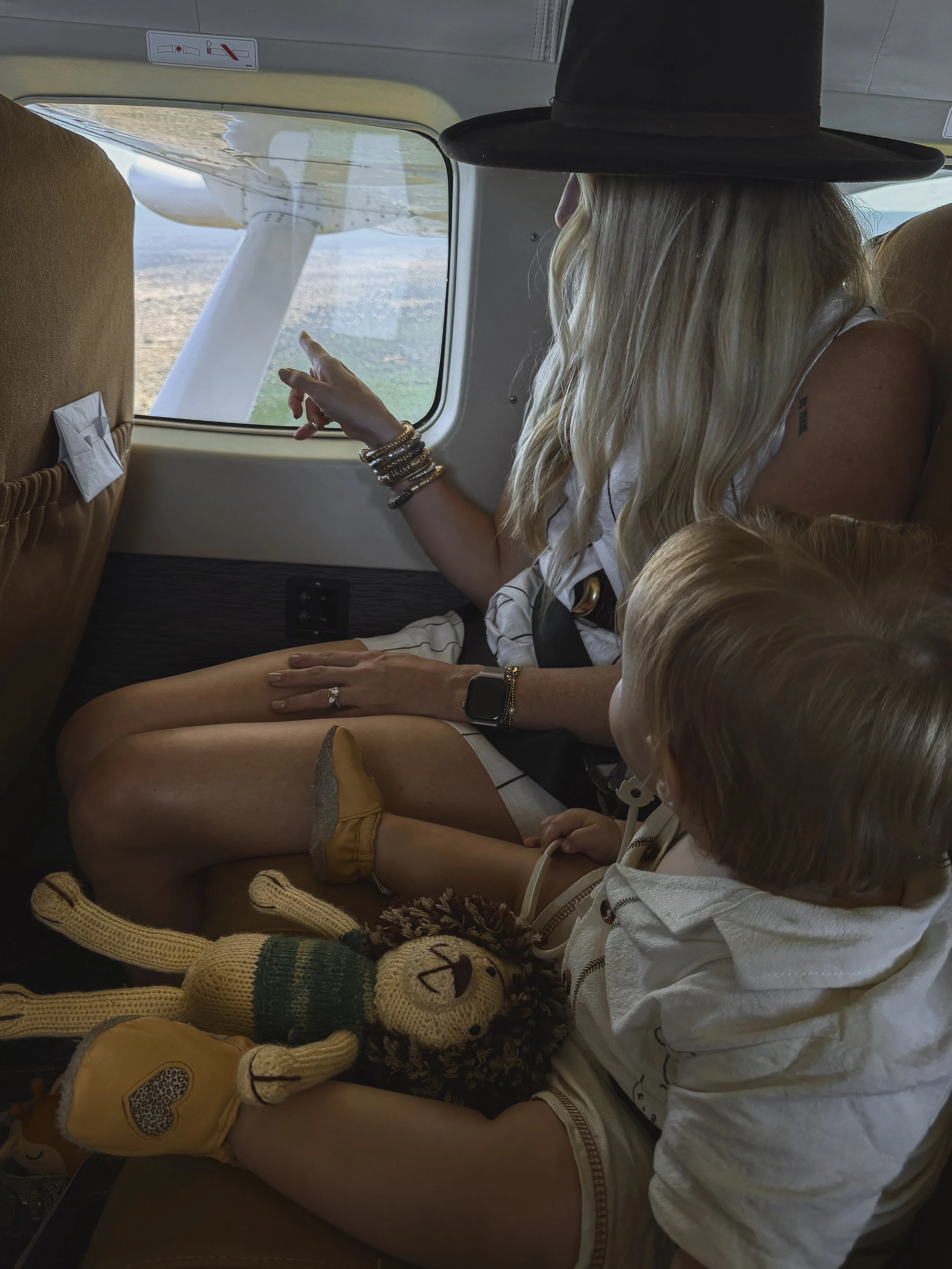
A light aircraft doesn't mean a four seater with a nervous man at the controls. These are propeller aircraft, licensed and commercially operated, flying scheduled and charter routes across the safari regions several times a day. They're the bush taxis of the sky. The companies I book with have been running these routes for years and they're a core part of how the industry moves people, not a novelty laid on for tourists.
We'll always send you the aircraft type before you fly, with the make, the model and photographs. Parents find it settles something to see the actual plane rather than imagine it, and I'd rather you boarded knowing exactly what you're getting on.
What's different about flying in a small aircraft
Some of these aircraft are pressurised and some aren't. It depends on the route and the aircraft flying it, and it's one of the details we send you beforehand.
If yours isn't pressurised, it flies low, generally under ten thousand feet, where the air is fine to breathe without help. The practical effect is that you feel the altitude changes properly. Small ears feel them more, and often more sharply than on a long-haul descent, because the change happens faster. In summer the pilot will adjust altitude to find smoother air, which can mean several of those changes in one short flight.
If yours is pressurised, it's closer to what your child has already been through on the flight into Africa.
What works: something to suck on for the climb and the descent. A dummy, a bottle, a juice, a snack. Charters usually put a bottle of water on board for each passenger, but bring your own for your child so you're not opening it at the wrong moment. Most of these flights run under an hour, so it's a manageable stretch rather than an ordeal.
The cabin gets warm in summer, on the strip and in the air. Dress your child in layers you can strip off.
The noise is significant. A window seat helps, because there's something to look at, and small children often want to be held more than usual on these flights. Give them a cuddle. And be ready for the thing nobody warns you about, which is that the engine noise puts a lot of children straight to sleep. Which, by any parent's measure, is a win.
The luggage question, and why it's less frightening than it sounds
On the shuttle flights we book, it's one checked bag of up to twenty kilos per person, plus a carry-on of up to five. The carry-on is separate. It doesn't come out of your twenty, and that's the bit most parents get wrong and then pack short. Allowances do vary by operator and route, so we'll confirm yours in writing before you fly.
Soft bags, please. No frames, no rigid sides, no wheels or only very small ones, because the hold is a small odd-shaped space and your bag needs to be pushed into it. A hard shell isn't forbidden outright, but it can't exceed forty centimetres wide, thirty high and sixty long, and soft is always the easier answer.
One thing worth knowing before you board. Oversized bags can't ride on your lap. Loose items in a small cabin are a safety issue, so don't plan around holding something that didn't fit.
You'll also be asked for everyone's weight when you book, including your child's. That request lands strangely if you haven't flown this way before, so it's worth knowing why. The aircraft is weighed as a whole. People, bags, fuel, all of it counts towards one number, and the operator is planning the load before you arrive. It's also why the luggage rules don't flex the way an airline's sometimes do.
Your baby gets an allowance too, which is newer than a lot of people realise. Infants, from birth up to their second birthday, are permitted one checked bag of up to ten kilos. That's ten kilos of nappies that don't have to fit into yours. For years this wasn't the case and you packed around it, so if you've flown these routes before, check again rather than assuming.
At two she moves into her own seat, which is less comfortable for both of you, but she brings a full twenty kilos with her, plus her own carry-on.
What we take out of your bag before you pack it
Twenty kilos sounds impossible with a small child, and it would be if you had to carry everything.
You don't, because the equipment question gets answered before you book. Cots, high chairs, baths, monitors, sterilising. If a lodge can't confirm what your child needs, that's a problem with the lodge rather than a problem with your packing. This is one of the first things we ask a property, and it's the reason our families aren't flying with a camp cot strapped to a duffel.
Most operators also have storage at their base, usually complimentary if you're booked on a return, so anything bulky can be left behind and collected on the way out. Some now hold it at more than one hub, which quietly widens what's possible with a routing. That works when you're routing back through the same hub, which is a decision made at the itinerary stage rather than at the airport, and it's worth flagging early if you're carrying something you can't do without at either end.
Between those two things, the allowance stops being the obstacle it looks like on paper.
How many flights is too many
This is the part I'd change about most family itineraries I see.
Every camp move is a flight. Pack, transfer to the strip, wait in the heat, fly, land, transfer again. It's a good three hours of your day even when everything runs on time, and it takes the shape out of a small child's routine.
Two camps in ten days is comfortable. Three is workable if the flights are short and you've built a proper rest day around each move. Four is somebody's brochure rather than somebody's holiday.
Fewer moves and longer stays is almost always the better trip with a child under four, and it's the recommendation parents are most surprised to hear from someone whose job is selling them travel.
What Changes at Each Age
As we plan for baby number two, I've been reflecting on the early days of taking Bradley on safari. The two to six month gap was a dream. Six to twelve months, watching her start to absorb the world. And now, as we head into the twos, things have become a whole lot more interesting. Being prepared has been our greatest gift, and it's the one I want to give to you.
Before any of it, one caveat that matters more than anything below.
This is our experience as a family. Bradley has been on more safaris than most adults we know, and she's used to this life in a way your child may not be yet. Every lodge is different and policies change constantly. Every family travels differently. And every child reacts differently, which is why I'll never tell you how yours will behave.
What I can give you is what we've found to be consistent. Private vehicles, always. Lodges that respect flexibility, always. And after that, a parent's knowledge of their own child is the deciding factor in where we book. You know things about your child that no itinerary can account for, and that information is more useful to me than anything on a lodge fact sheet.
Two to six months
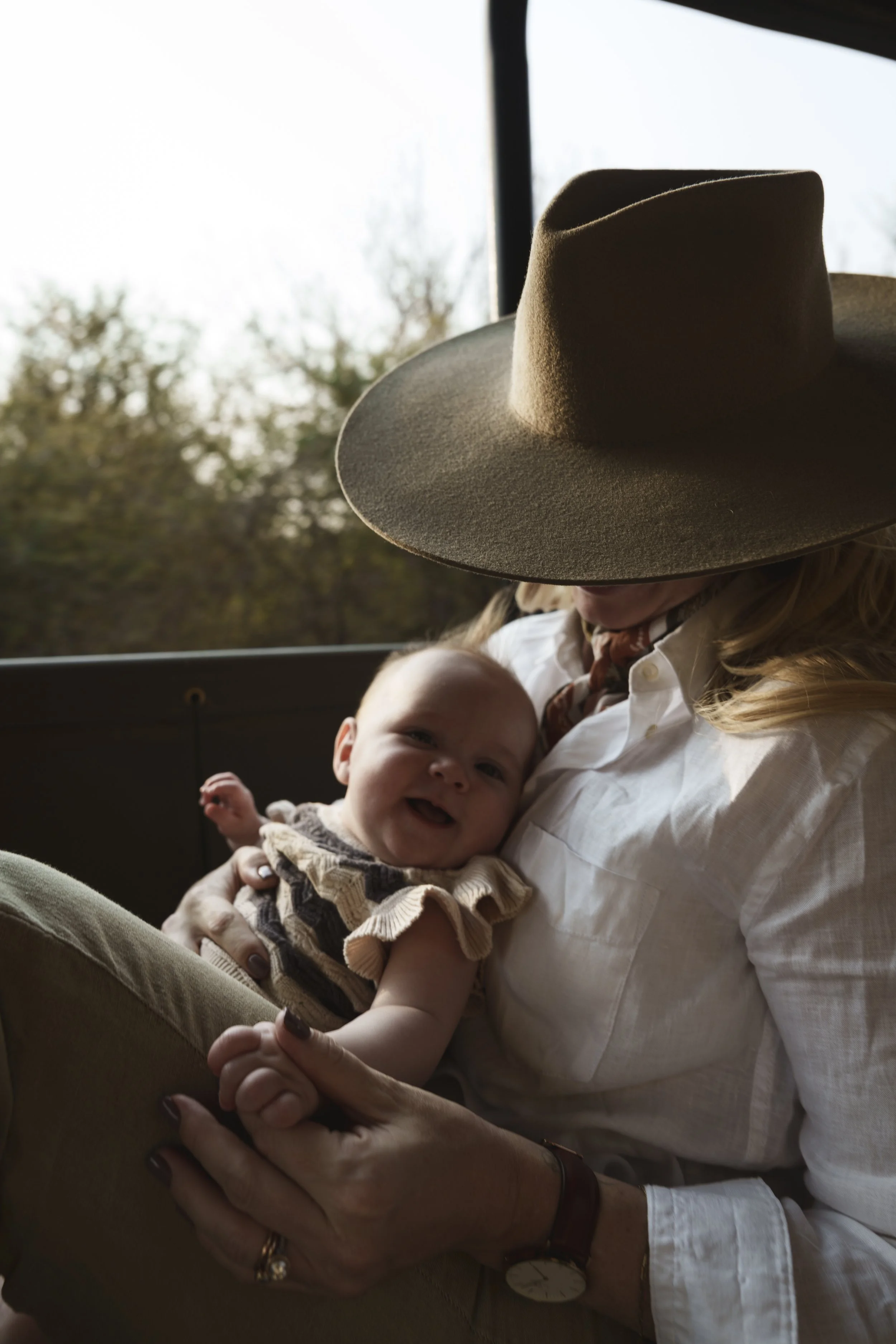
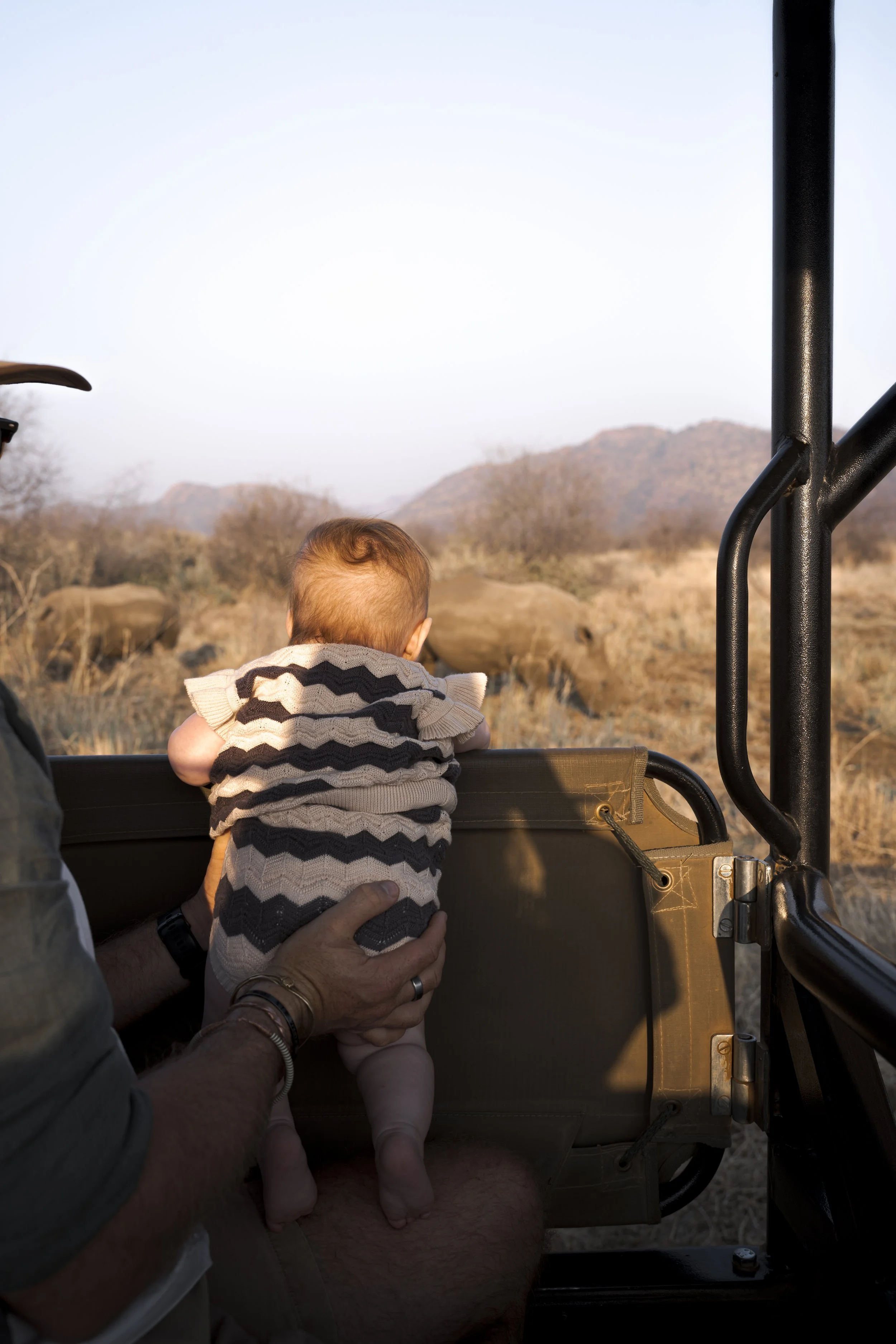
Honestly, this is the dream time. Not for your child, but for you as parents.
It's that magic window where you can absorb the bush, stop putting it off, and simply enjoy the feeling of your little person out in the fresh African air as you bumble through the bush on a game drive. Babies this age only need you. Feeds on demand, naps when they need them, and a game vehicle is the perfect African sleep machine. You can carry them in a sling. There's no crawling themselves into danger, so the worry drops away.
It also opens up a lot of lodge options. A standard suite with a cot is enough, which is a more cost-effective way to travel, alongside a private vehicle as per our booking policy. It's almost normal life.
Two things I'd say about timing.
Very young babies aren't generally recommended for safari, and I'd be cautious with anything under two months. As a mother, I'd aim for a first safari at around six months, when you know their routine, the major vaccinations are done, and they're more adaptable to a change of environment. If you're a first-time parent, that's also the point where you'll feel most comfortable, and your comfort is part of the trip.
I did it earlier than that with Bradley, because I was working. I'd still tell you to wait if there's no reason to rush.
Malaria-free to very low risk regions are the priority here. This time is about enjoying your tiny person on their first game drive, not about you worrying through it.
Six months to a year
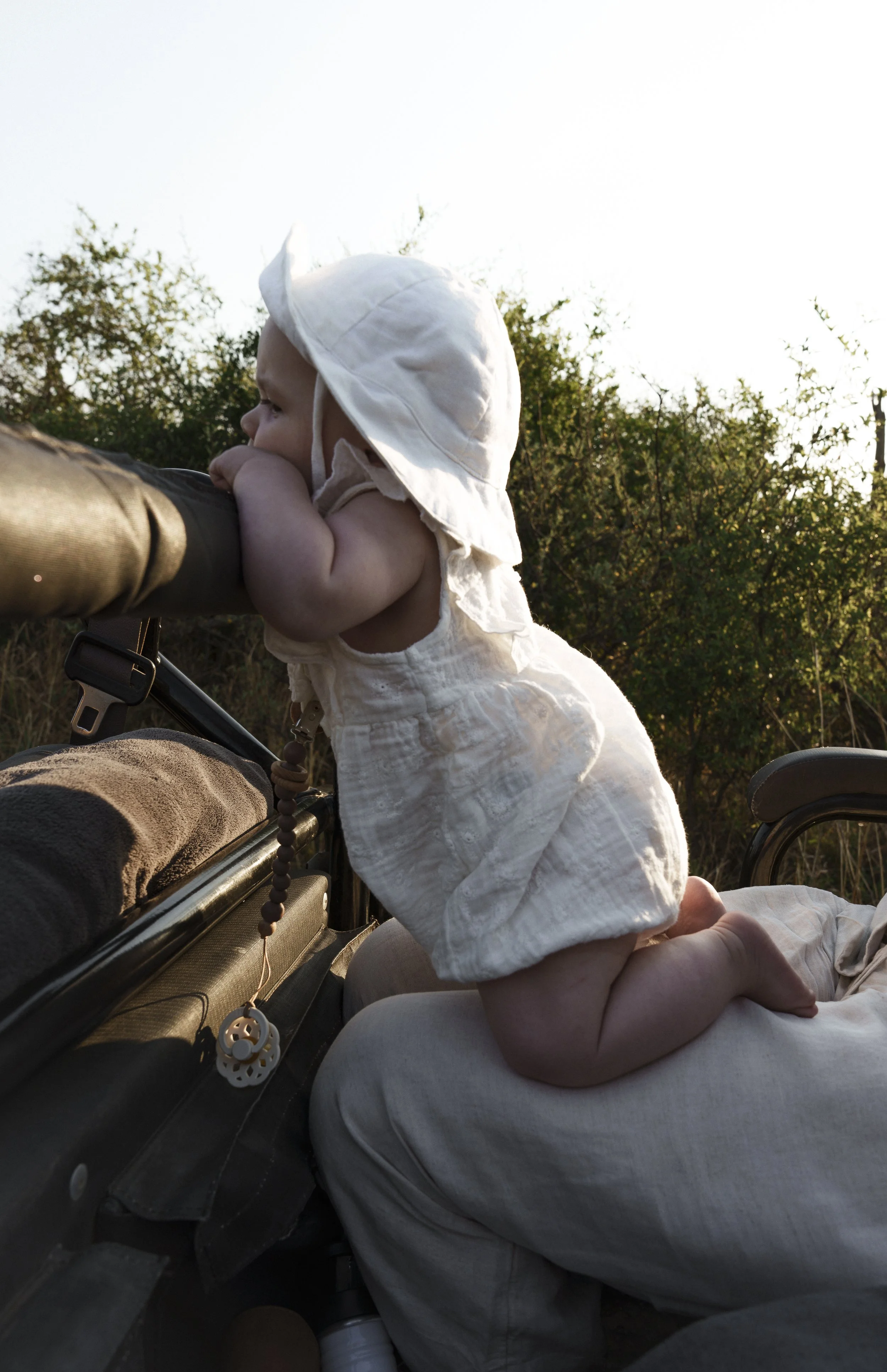
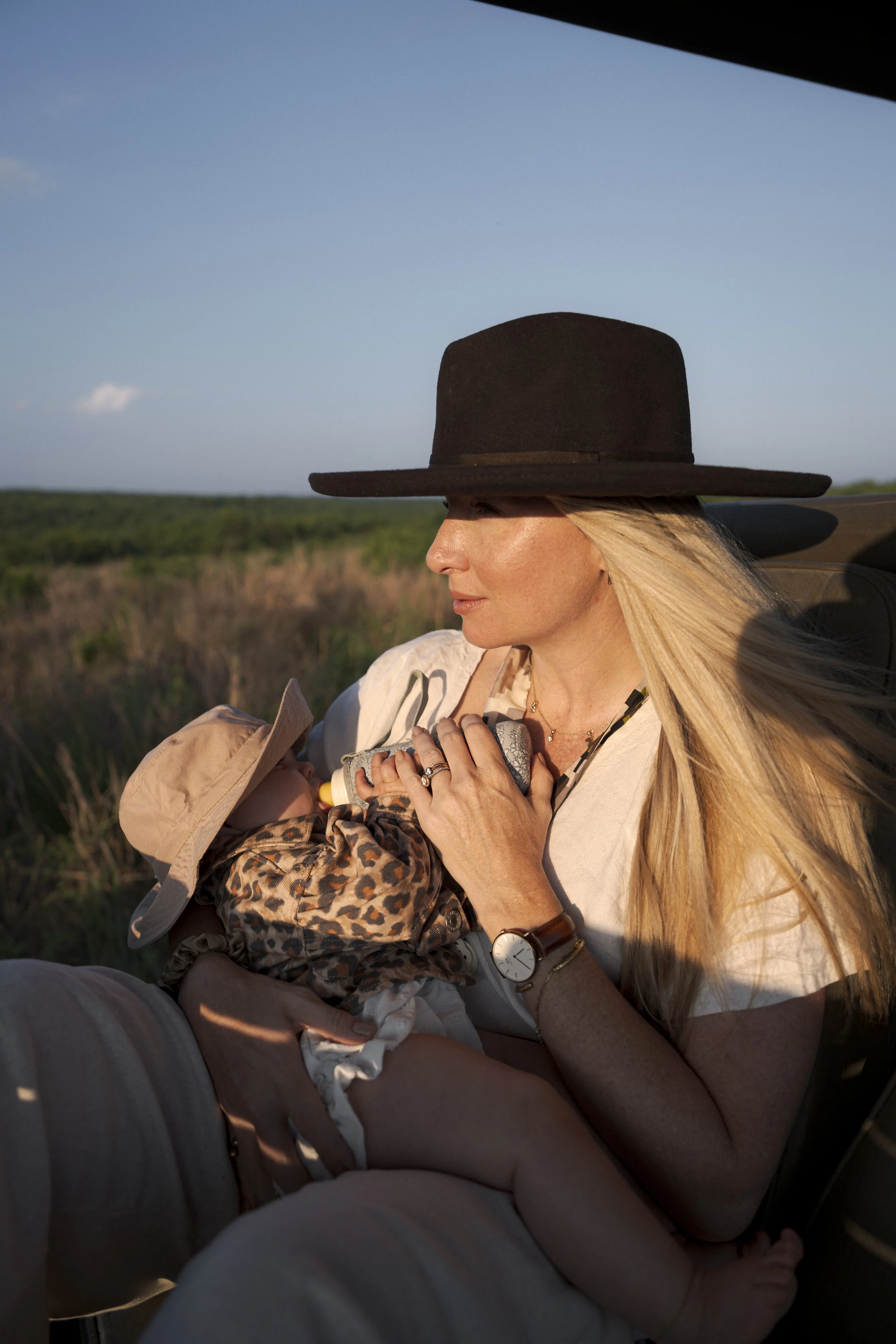
I loved this age.
They start to absorb the world. Noticing animals, noticing sightings. There's more crawling, which means suites need more space and more protection from the outside, but they're still slow enough that you're not calculating how fast your child can reach an open door.
Standard suites are still an option, and we think that route creates more connection between families. If you'd rather have a family unit so you can enjoy your evening without waking your child, we'll talk it through. This is also the point where most parents feel comfortable letting a lodge babysitter take over the nighttime routine, and it's honestly where we felt we got a bit of our normal life back.
We celebrated Bradley's first birthday in Hwange, in Zimbabwe. It was the best idea we've had, and we made a reel out of it here, because a first birthday on safari is a milestone you won't forget and more families should know it's possible.
One to two
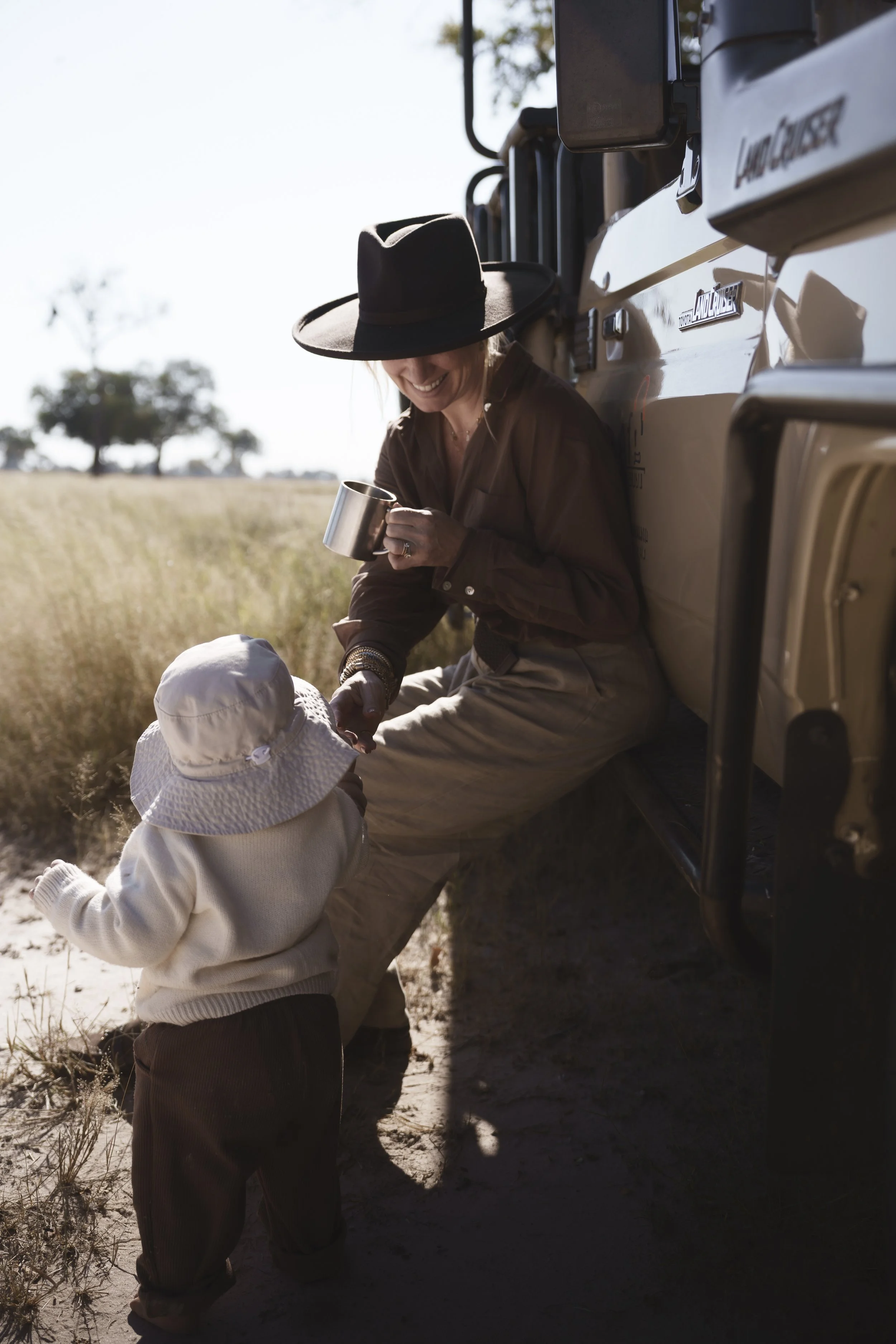
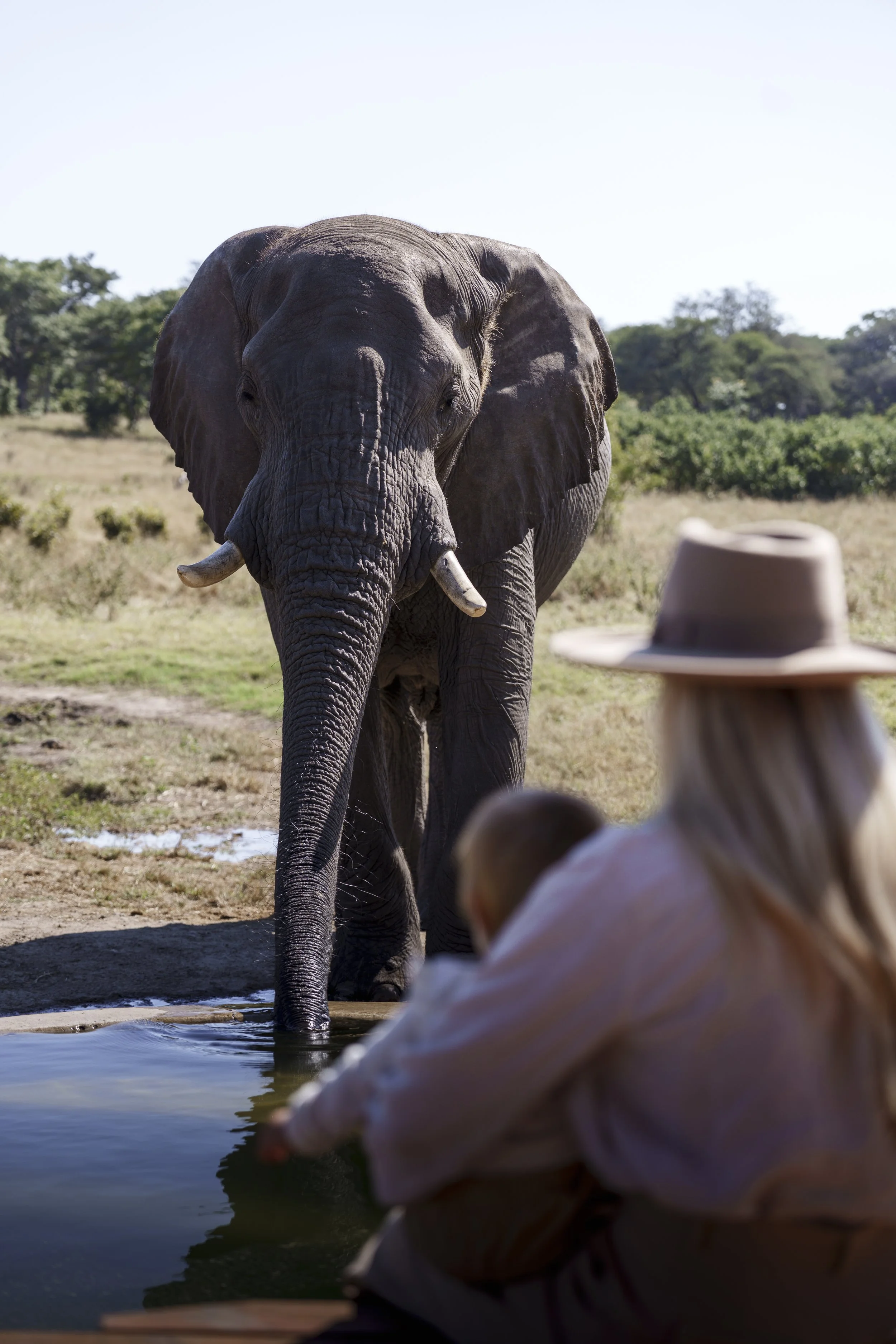
Private vehicles become genuinely vital here.
You now have a possibly walking, definitely chatty child who gets afternoon zoomies and rarely sits still for three hours. Flexibility is the whole point at this age. Guides start to matter enormously, specifically in how they read a sighting with a child who doesn't yet understand quiet, because they're a child and that's what children are.
Bigger suites help. So do a camp’s surroundings where little legs can burn off energy. This is where we start suggesting camps with children's programmes and hospitality that genuinely knows how to look after and entertain your child, rather than tolerating them.
Sleep routines start shifting, so a suite close to the main lodge matters, as does a kitchen willing to feed a child at an awkward hour rather than at their hour.
We can also start venturing into low risk regions here, in the right season. By this stage you're more attuned to your child's needs, you have your own medicine bag packed with the essentials, and the job becomes placing you in the right lodge, honouring the brief.
On cost, under-twos are often free or close to it for accommodation, and infants on a lap are usually charged very little on flights. It varies by property and by operator, so we confirm it rather than assume it. Conservation levies are the same story. Some reserves exempt young children entirely, some charge a reduced rate, some charge every guest regardless of age. Worth checking, and worth making the most of your free-loading traveller while it lasts.
Two to four
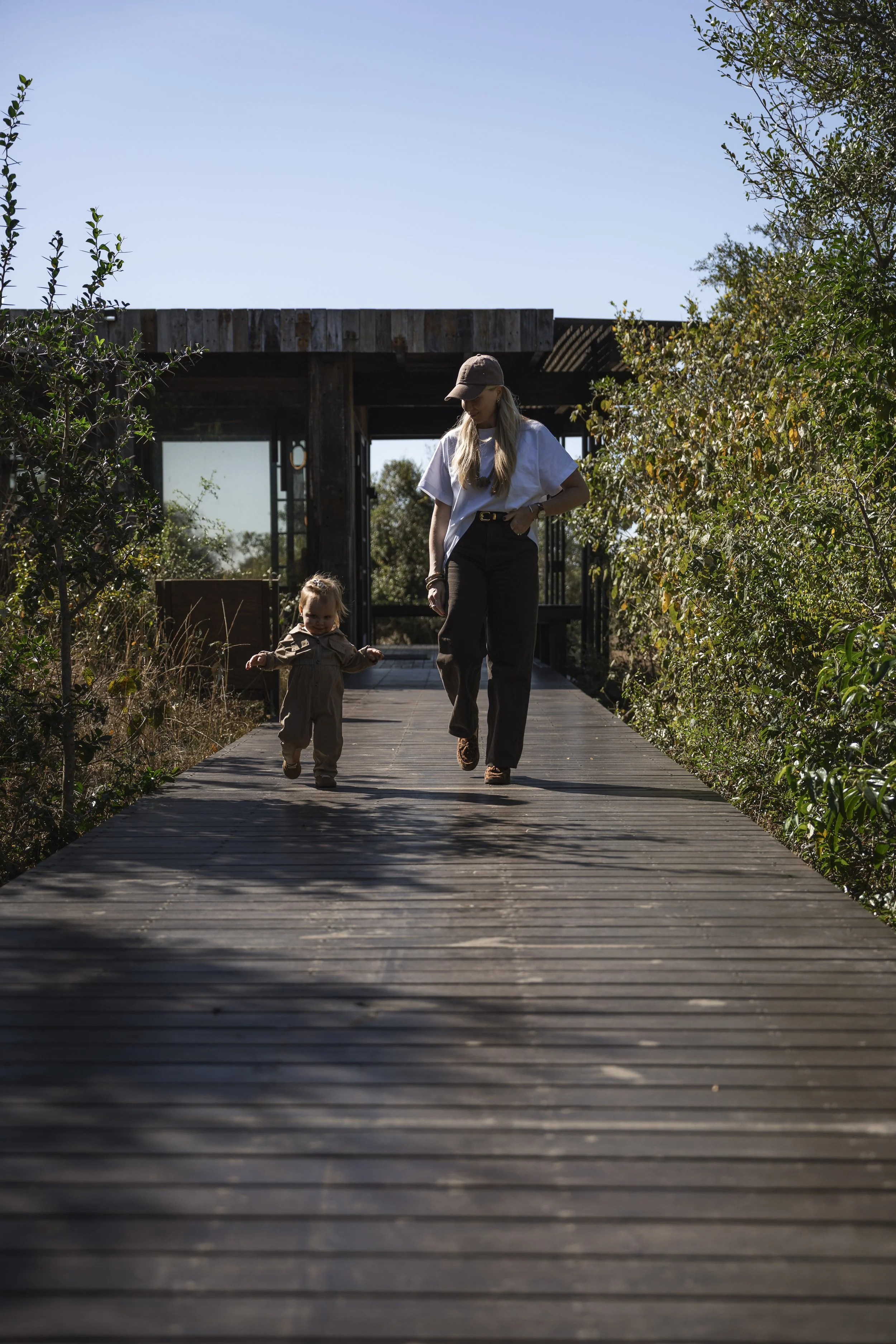
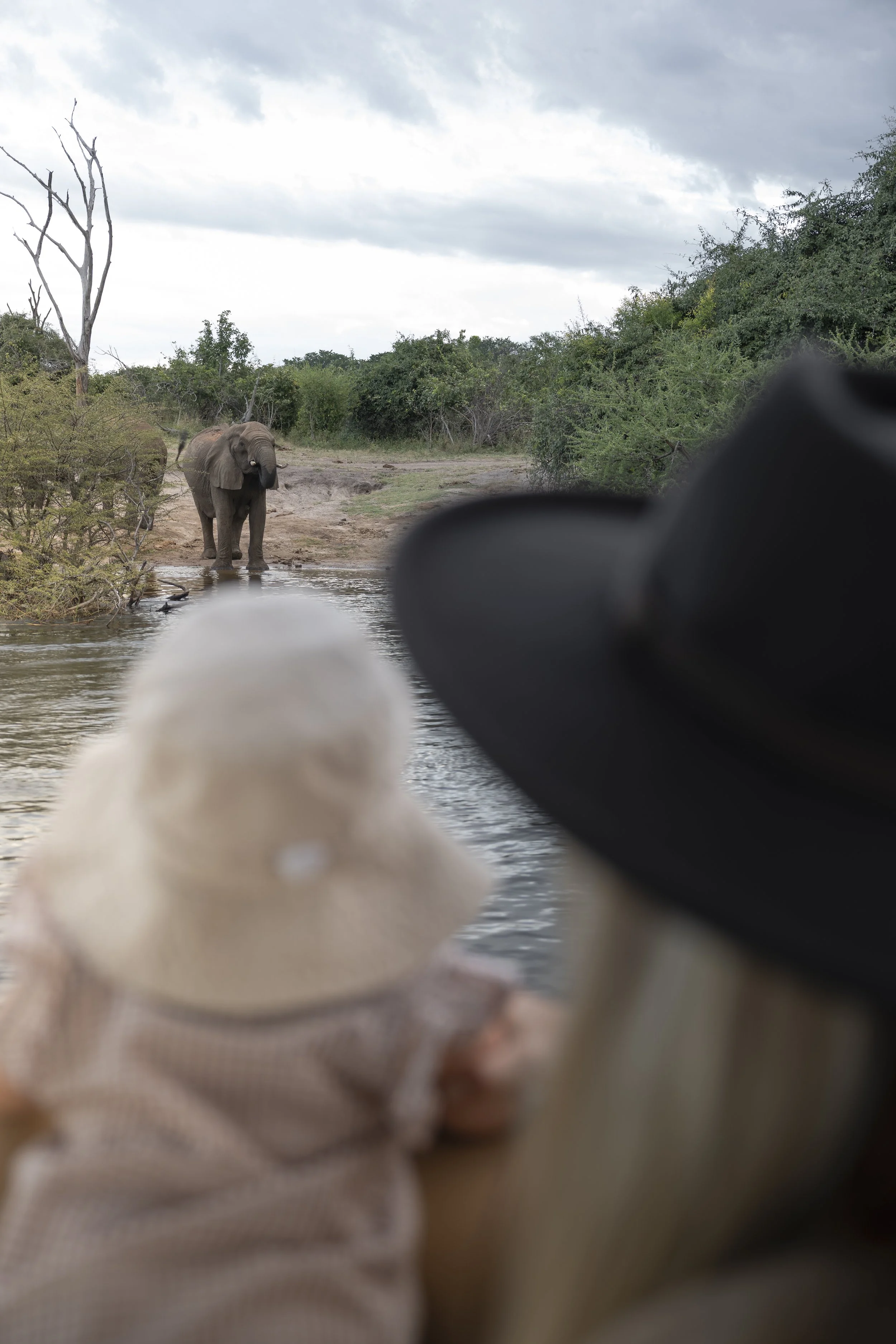
Get ready for the adventure.
Children's programmes move from nice to necessary. So does a guide who can hold a child's attention, and a lodge that's genuinely set up for them rather than adapted. Family suites become the sensible choice. So do the eyes of the parents, because everything gets faster.
Everything we apply at one to two applies here and keeps applying up to six and beyond. The difference is that your child is now participating rather than being carried through it.
This is also where the length of stay starts doing more work than anything else in the itinerary.
Bradley now needs about a day to settle into a new place. She's aware enough to notice she isn't at home, and that awareness costs you the first twenty-four hours. On a three-night stay, that's a third of your trip spent adjusting.
Give her longer and something else happens. She starts forming relationships. She works out who her people are in camp, and once she has her lodge besties, we can actually make a decision about whether she'd rather hang back with them or come out on the drive. That choice doesn't exist on night one, because nobody knows anybody.
Sleep windows shift at this age too, and they shift more in an unfamiliar room. There will be a night where a sleep monster refuses to go down because the shadows are in the wrong place, and the next morning you'll have to decide between a drive you paid for and a child who needs another two hours.
On a three-night stay, that decision hurts. On a longer one, you take the lie-in without losing anything, because there's another morning drive tomorrow and the day after that. The guilt disappears, which is the difference between a holiday and an itinerary you're trying to keep up with.
Fewer camps, longer stays. It's the single change that makes the biggest difference at this age, and it's the one most families resist because they want to see everything.
One practical change worth knowing. At two she leaves your lap on the light aircraft and takes her own seat, which is less comfortable for both of you, but she brings a full luggage allowance with her.
If a lodge you've set your heart on doesn't run a children's programme, we'll arrange a private guide to look after your children instead. We've done this for a lot of families, and more than once it's been the better experience. A guide with one family's children, all day, learning what interests them, beats a scheduled programme built for whoever happens to be in camp that week.
Sleep, Routine and Everything You Cannot Control
Travelling can become a sleep disaster. Your usual routine becomes a game of Tetris. But I am here to tell you that of all the holidays you could go on, safari is the one that holds the most routine, and we find it actually fits parents.
A standard safari day goes like this. 5.30am wake up, light nibbles and coffee, game drive until 10am. Breakfast. Siesta at 11am. Lunch between 1 and 2.30pm, high tea at 3.30, afternoon game drive at 4pm, back at the lodge by 6.30 or 7pm.
Bradley is definitely on safari time. She normally wakes us up at 5.30, needs a nibble at 6, and her morning nap happens on the game drive. The rest of the day she fits in a nap during siesta time and has dinner at 6.30 before we put her down, and then we as parents get to go and enjoy dinner knowing she's had a day that didn't fall far from her normal routine.
Getting there is the hardest part
That's where the routine goes, and we let it. Bradley sleeps when she needs to on travel days and we stop trying to manage it.
Jet lag is a pain, and the answer is the same as it is for adults. Get onto local time and stay there. If your child sleeps badly for the first night or two, the drives will top up the sleep bank, because a game vehicle is the most effective sleep machine in Africa.
It's also the strongest argument for longer stays. Three nights or more in a camp gives everyone time to find the rhythm again, and a two-night stay barely gets you there before you move.
Cots and everything else
There's a word used across this part of the world for the mountain of things you end up carrying. Katundu. Stuff, and enormous quantities of it.
The point of what we do is that you don't need all that katundu. You have a child to manage on a travel day, and you shouldn't also be managing the ten things that child needs. The lodges we book have cots, mosquito nets over them, extra blankets, and turndown for small sleepers, because we confirm all of it before you arrive rather than hoping. This is genuinely one thing you can take off your list.
The one thing we carry ourselves is a blackout cot cover.
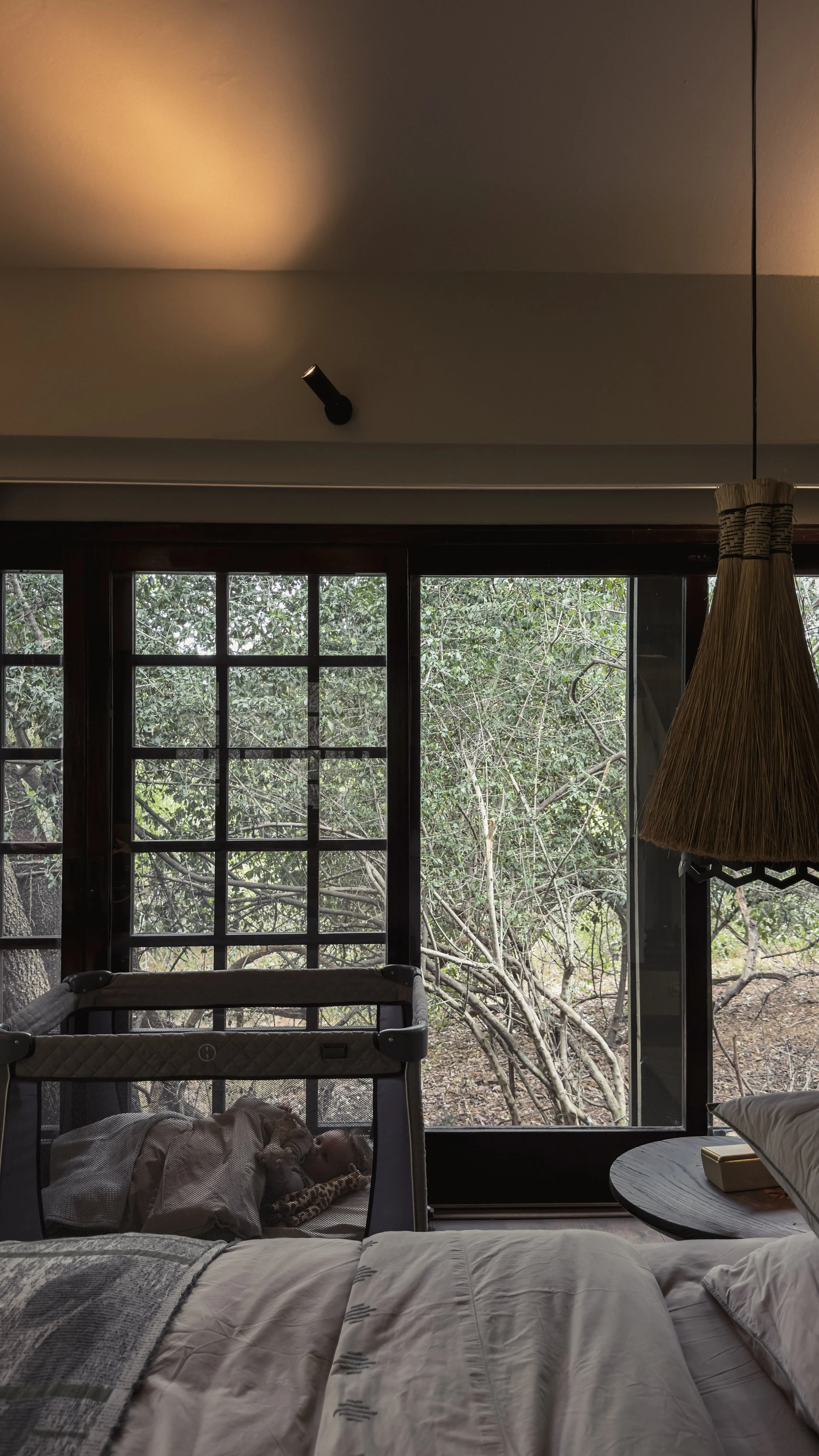
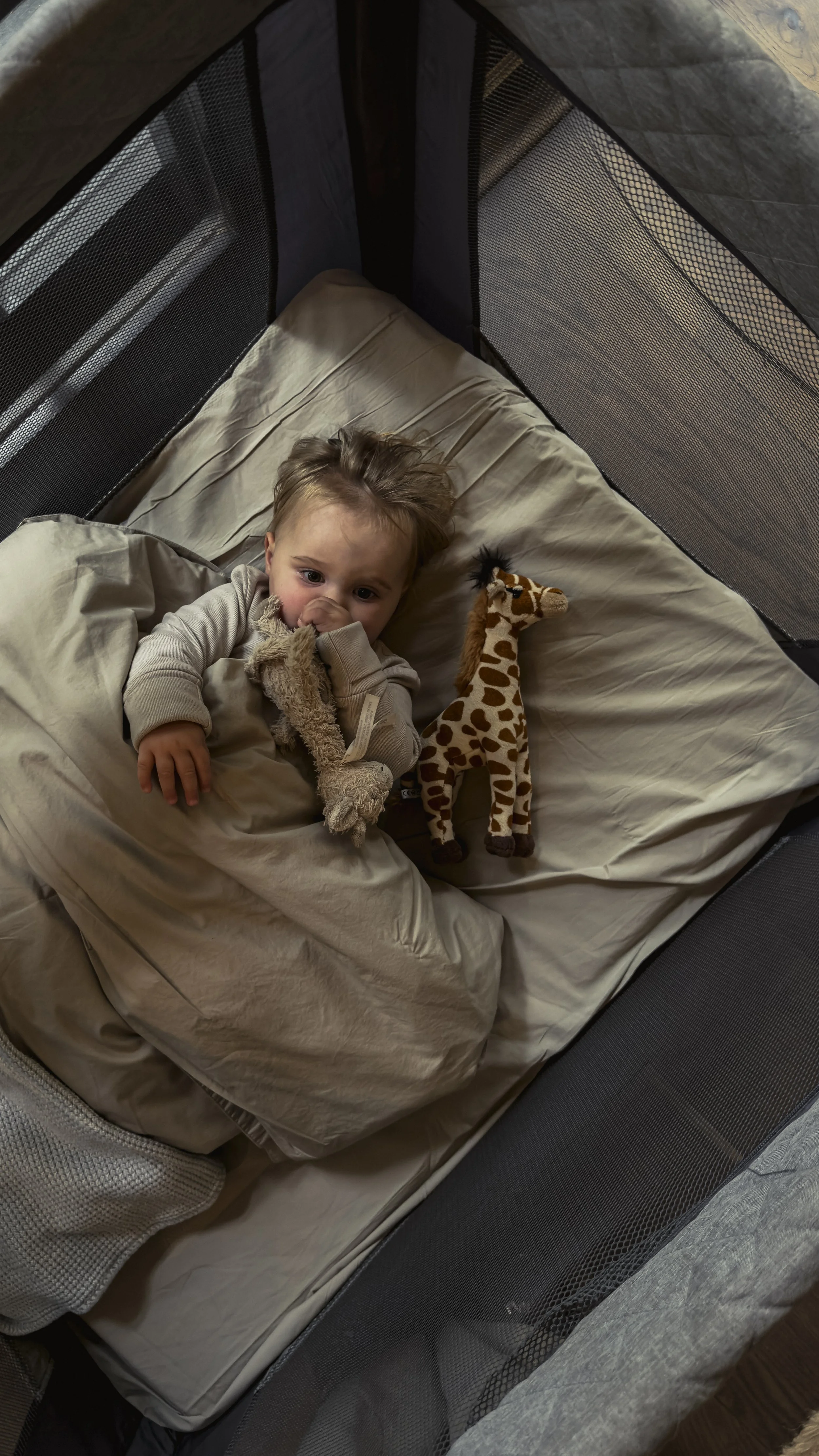
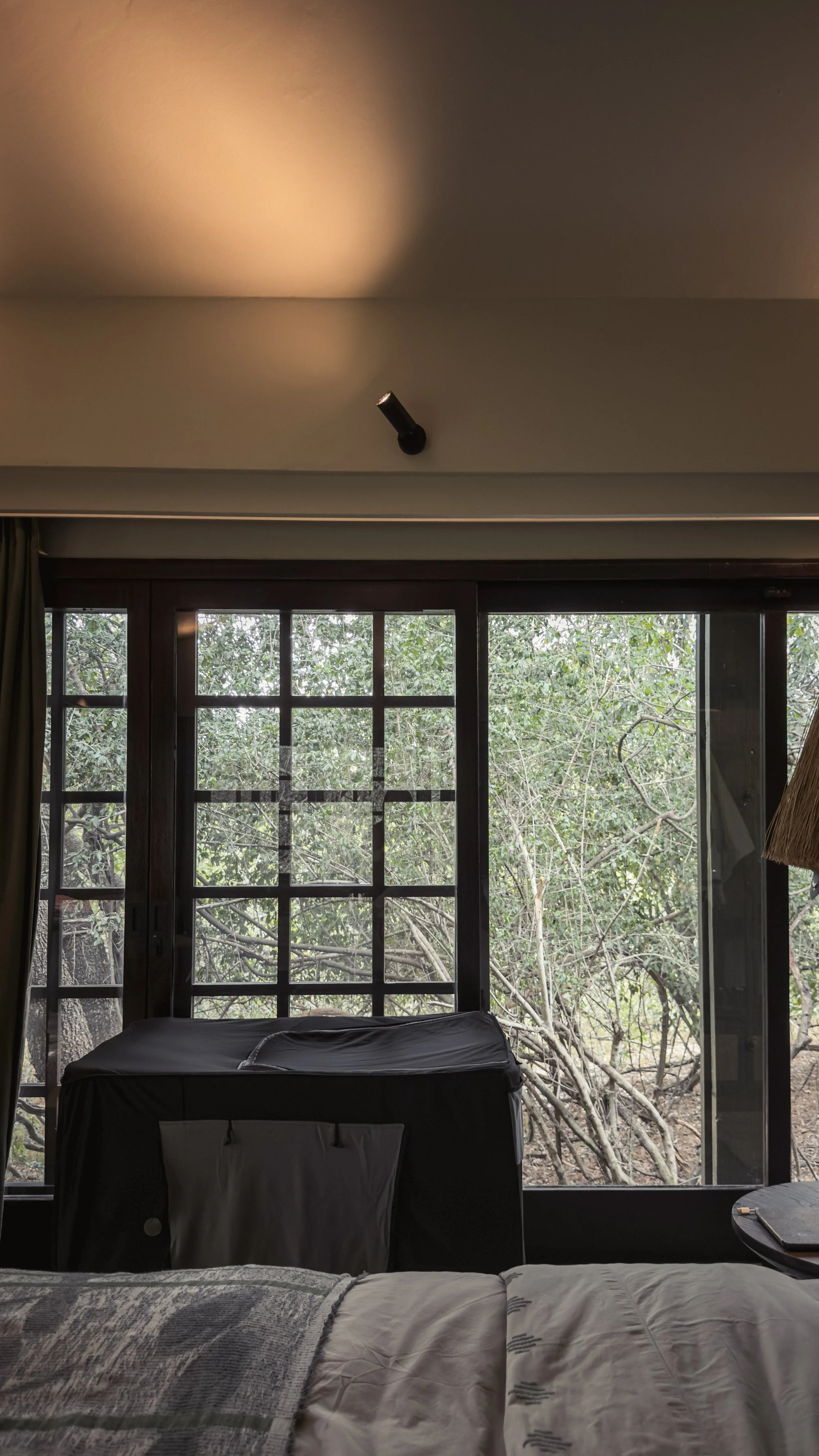
Light is the main reason. Safari suites are beautiful and they are frequently not dark, and a midday nap in a canvas room at eleven in the morning is a losing battle without help. The cover solves it. It's ventilated, so there's airflow through it, and it doubles as another layer of mosquito protection over the cot.
I've yet to arrive at a lodge where it hasn't fitted, wooden frames included, though I'd still have us check the cot before you count on it. It's one of a handful of things that live permanently in our bag, and the rest of that list is here.
Everything in Africa goes bump in the night
Hyena calling in the distance. A lion somewhere off in the dark. Nocturnal birds looking for a mate.
These sounds are far scarier to you than they are to your children. If yours is a light sleeper, a battery-powered sound machine is worth packing, but most families find the bush becomes a lullaby rather than an obstacle within a night or two.
Monitors, wifi and the village
Monitors are largely solved. We don't travel with one. We use an app that links one phone to another over the lodge wifi, and it's worked everywhere we've stayed.
Worth knowing that camp wifi is often satellite and it isn't always steady, so treat it as the likely solution rather than the guaranteed one.
The better answer, most nights, is a person. A babysitter sitting with your sleeping child gives you a far better chance of actually relaxing over dinner than a screen does. It takes a village to raise a child, and in Africa that village takes the role seriously.
Which suite, and why it matters more than you think
This is the question that decides how your evenings go.
A standard suite works well when your child is in a cot. You're in the same room, which means an early bedtime and reading in the dark, and plenty of parents are happy with that for a few nights. It also keeps you close, which is worth something in an unfamiliar place.
Older children, or parents who want their room back after seven, need a family suite with an adjoining room or a separate sleeping space. The distinction that matters isn't the number of beds. It's whether there's a door between where your child sleeps and where you sit.
We'll always give you the options and tell you which one fits how your family actually operates, because a suite that looks perfect in photographs can be the wrong shape for a family entirely.
What a Baby Actually Gets Out of a Safari
I get this comment all the time. Children won't remember a safari at this age.
And I get it. Spending what most people would spend on a bucket list holiday, on a child who won't recall a minute of it, is a fair thing to question.
But here's the honest answer. She won't remember it. That was never what we were building.
When Bradley was one she pointed out an elephant munching a tree near the game vehicle. She had seen elephants plenty of times, and every time we had said "shhh" as we approached. This time she lowered her voice and whispered in her little baby language, then looked at me, as if to confirm we were seeing it too. I can't tell you how she knew. I can only tell you it was the moment that told us this was why we wanted her here.
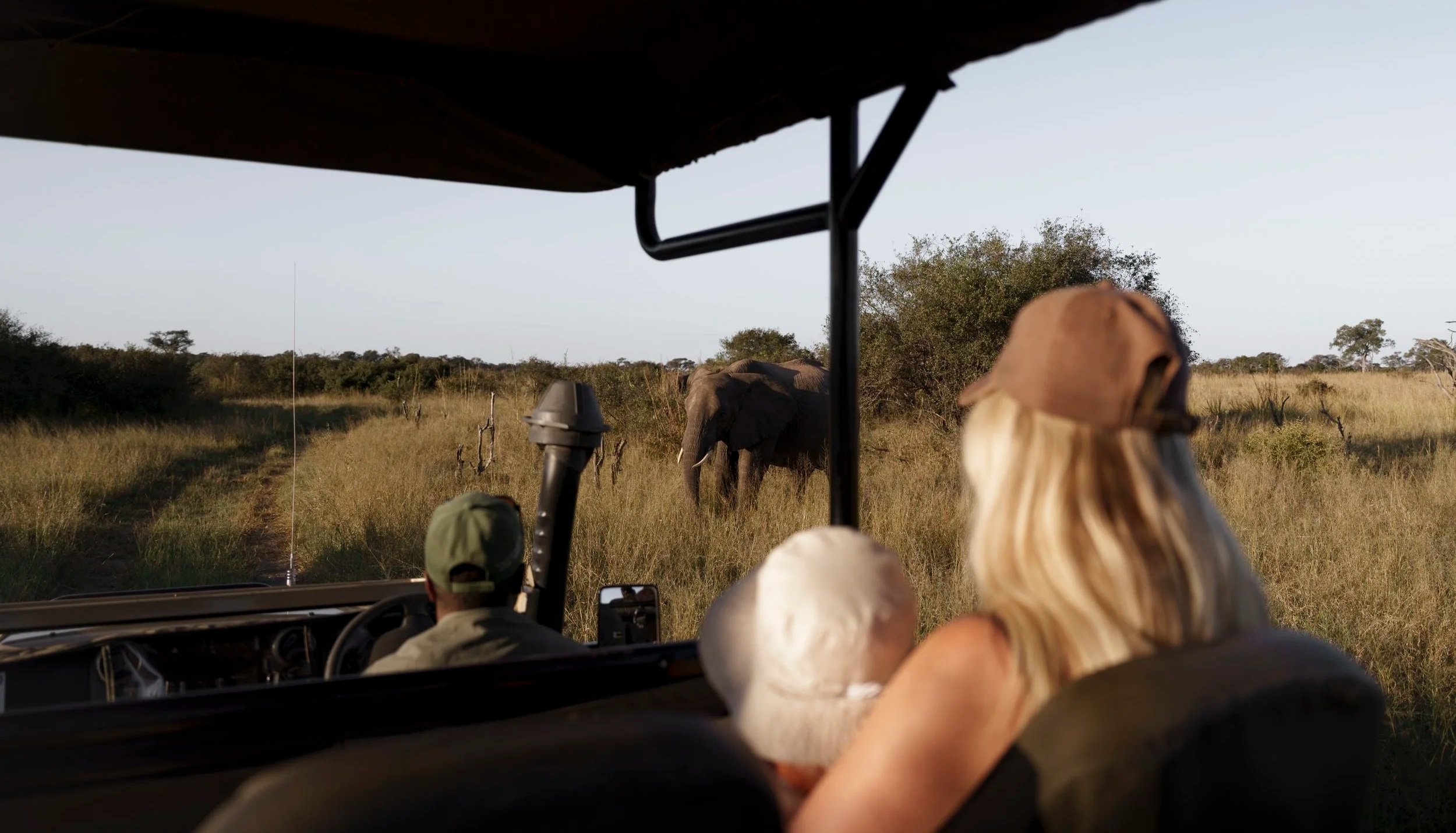
What's going in isn't a memory. It's a sense of discovery that's alive rather than taught, and an introduction to the natural world so early that she absorbs it rather than tolerates it. You can see the difference before they can talk.
And it changed something for us too.
We didn't have to wait until she was older. We didn't have to leave her behind while we made memories of our own, and we have years of those already. We wanted a holiday that included her, and taking her somewhere the world had told us to wait for turned out to be the whole point.
We want her to grow up aware of the wild world around her. To have some foundation of caring about wild places, because those places are getting harder to protect and the pull of everything else is getting stronger.
It might be a small part of your child's upbringing. What it does to you as parents, and to them, is bigger than you'd expect.
She won't remember any of it. She'll have absorbed all of it. Those aren't the same thing.
So, can you take a baby or toddler on safari?
Yes. When it's designed for them.
FAQ
What is the youngest age for a safari?
There's no fixed rule, but very young babies aren't generally recommended and we'd be cautious with anything under two months. We'd suggest around six months for a first safari. By then you know their routine, the major vaccinations are done, and they adapt more easily to a change of environment. It's also the point where most first-time parents feel confident enough to enjoy the trip themselves, which matters more than people expect.
Do babies need malaria tablets?
That's a question for your doctor, not for us. We're not medical professionals and we'll never tell you what your child should take. What we will do is tell you which regions we'd recommend, in which months, and why. You take that to your medical practitioner and let them advise you based on your child's age and history.
Can a baby fly on a light aircraft transfer?
Yes, and we will always recommend it as the better option over a long road transfer. Infants travel on a parent's lap until around two, with a checked allowance of their own of up to ten kilos, after which they take their own seat and a full adult allowance. You'll be asked for everyone's weight when booking, including your child's, because the aircraft is weighed as a whole. Policies vary by operator, so we confirm the details on every flight rather than assume them.
Do safari lodges provide cots and baby equipment?
The lodges we book do, because we confirm it before you arrive. Cots, mosquito nets over them, extra blankets, and turndown for small sleepers. Not every property is set up this way, which is precisely why we ask rather than hope. It's the difference between a lodge that accepts children and one designed for families.
Is it worth taking a child who won't remember it?
She won't remember it. That was never the point. What goes in at this age isn't memory, it's a sense of discovery and an early familiarity with the natural world that you can see well before they can talk about it. And it changes something for the parents too, which is the part nobody mentions.
Written by Jemma Park
Founder of House of Wild, qualified safari guide, photographer and mother. Having travelled extensively across Africa both professionally and now as a parent, she specialises in designing luxury safaris for families with young children.
